Blog

  • Avoid Moisture and Mold: Tips for Temporary Window Coverings

    Avoid Moisture and Mold: Tips for Temporary Window Coverings

    Temporary Window Coverings, Condensation & Indoor Air Quality Considerations – Nanaimo, Mill Bay, Cowichan, Duncan, Ladysmith, Nanoose, Parksville, Qualicum, Port Alberni, Courtenay, Comox, Campbell River and all of Vancouver Island

    Issued by: Pacific Decontamination Services
    Applies to: Occupants, Landlords & Property Managers
    Distribution: Tenants, Strata Councils, Building Management
    Region: Nanaimo & Vancouver Island


    Purpose of This Advisory

    This advisory is intended to inform occupants, landlords, and property managers of the potential risks of moisture, mold, and building materials associated with temporary plastic or poly window coverings, commonly used during colder months or renovation activities.

    While such coverings may appear to reduce drafts or heat loss, improper installation or prolonged use can unintentionally create conditions that support moisture accumulation, mold growth, airborne contamination, and damage to building materials.


    Technical Background

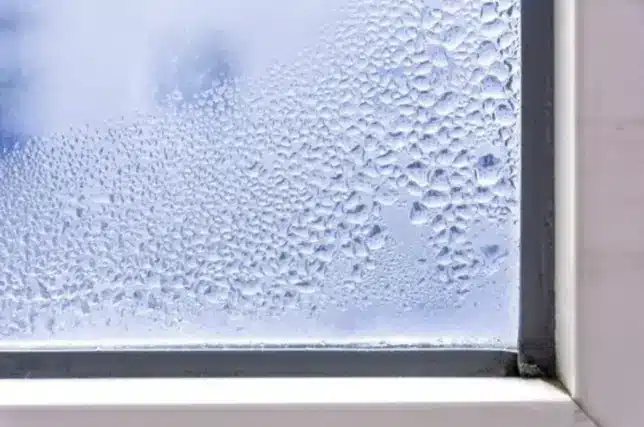
    Plastic or poly window coverings act as a vapor barrier. When warm, moisture-laden indoor air contacts colder window surfaces, condensation forms. When plastic coverings are installed tightly against windows:

    • Moisture can become trapped between the window and the plastic
    • Air circulation is restricted, preventing evaporation and drying
    • Condensation may persist for extended periods
    • Moisture can migrate into window frames, trim, drywall, insulation, and wall cavities

    These conditions may support active mold growth, often in concealed areas not immediately visible to occupants, landlords, or property managers.


    Health Considerations: Airborne Mold Spores & Mycotoxins

    When mold becomes established, it can release microscopic mold spores and, in some cases, mycotoxins into the indoor environment. These contaminants can become airborne and spread beyond the original moisture source.

    Potential health effects may include:

    • Irritation of the eyes, nose, throat, and skin
    • Worsening of asthma or other respiratory conditions
    • Headaches, fatigue, or flu-like symptoms in sensitive individuals
    • Increased risk to children, seniors, and immunocompromised occupants

    Because airborne spores and mycotoxins are not always visible and may not produce strong odors, exposure can occur without obvious warning signs. Early awareness and reporting are essential for protecting occupant health and managing risk.


    Property & Building Material Risks

    From a building and asset management perspective, prolonged moisture exposure from trapped condensation can lead to progressive deterioration of building materials, a concern for landlords and property managers responsible for maintaining the structure’s integrity.

    Potential impacts include:

    • Deterioration or rot of wood window frames and trim
    • Swelling, softening, or breakdown of drywall and gypsum board
    • Reduced effectiveness or saturation of insulation
    • Corrosion of fasteners and metal components
    • Hidden damage within wall assemblies and window interfaces

    If left unaddressed, these conditions can contribute to Condition 3 mold contamination, increase remediation costs, and elevate long-term maintenance and liability exposure.


    Increased Risk Factors

    Risk is elevated in:

    • Bathrooms, kitchens, and bedrooms
    • Units with limited ventilation or inconsistent exhaust fan use
    • Coastal or high-humidity environments
    • Buildings with tightly sealed envelopes
    • Extended or seasonal use of sealed plastic window coverings

    Recommended Best Practices

    To reduce risk, occupants, landlords, and property managers are encouraged to:

    • Avoid long-term use of sealed plastic or poly window coverings
    • Maintain adequate ventilation, particularly in moisture-producing areas
    • Ensure bathroom and kitchen exhaust fans are used as intended
    • Consider breathable thermal curtains or purpose-built interior storm windows
    • Maintain indoor relative humidity levels between 30–50%
    • Conduct periodic inspections for condensation, staining, or material deterioration

    Where plastic window coverings are already in use, routine inspection and moisture monitoring are strongly recommended.


    Reporting & Early Intervention

    Occupants are encouraged to promptly report the following to landlords or property managers:

    • Persistent condensation on windows or frames
    • Musty or earthy odors
    • Visible staining, discoloration, or material degradation
    • Peeling paint, bubbling finishes, or softened drywall near windows

    Early reporting allows landlords and property managers to take timely corrective action and helps prevent escalation into more extensive damage or contamination.


    Professional Assessment, Decontamination & Prevention Strategies

    Pacific Decontamination Services provides professional services for occupants, landlords, and property managers, including:

    • Moisture and mold assessments to identify active and hidden sources of moisture
    • Air and surface sampling to evaluate indoor air quality and contamination levels
    • Condition-based mold remediation and decontamination, performed in accordance with industry best practices
    • Prevention strategies, including moisture control recommendations, ventilation improvements, and material protection guidance

    Professional assessment and preventative evaluation can help reduce:

    • Structural and building material damage
    • Indoor air quality concerns
    • Tenant complaints and occupancy disruptions
    • Long-term remediation, repair, and liability costs

    Early intervention and proper decontamination are key to preventing minor moisture issues from developing into widespread mold contamination.

    What Can You Do?  We Can Neutralize Your Mold or Rodent Infestation!

    In most situations, Pacific Decontamination Services can neutralize your mold up 99.99999%. If our spray, fog or foam can touch it, we can neutralize it.  Our services come at a fraction of the cost as compared to the expensive approaches like soda / dry ice blasting, hepa vacuuming, scrubbing, removal of insulation and deconstruction and reconstruction of the attic and roof.


    We neutralize the mold, or bacteria in your attic, crawl space, home, building, vehicle, or property by applying our eco-friendly, safe chemical on all surfaces and airborne, focusing our efforts on the visible mold areas. Depending on the job, we apply our formula by spray, mist, foam, or fog. We further kill all airborne mold spores in your attic. The average time of our on-site service is approximately one hour. An additional four hours is required to achieve maximum effectiveness. We ask that you stay out of the attic for approximately 5 hours in total. Read more about how we work.

    Pacific Decontamination Services uses the world’s strongest, most effective and safe antimicrobial disinfectant, deodorization and chemical decontaminate. Our professional application will eliminate up to 99.99999% of any allergen, germ, bacteria or fungus that it touches. AND as powerful as it is, it is also completely safe.

    What do you do next? How do you solve the challenge of mold and associated health hazards?

    Call Pacific Decontamination Services at 778-269-0208 or email us at our email address: contact @ pacificdecon dot com

    Serving All of Vancouver Island: Victoria, Cowichan, Duncan, Nanaimo, Parksville, Qualicum, Courtenay, Comox, Campbell River, and Port Alberni.
  • How to Spot Smoke Damage in Homes: A Buyer’s Guide

    How to Spot Smoke Damage in Homes: A Buyer’s Guide

    What do you do if you find evidence of smoking in a home for sale in Duncan, Ladysmith, Cowichan, Nanaimo, Parksville, Qualicum, Port Alberni, Campbell River, Courtenay, or Comox? Walking into a prospective home and catching even a faint whiff of cigarette smoke can be a red flag for many buyers. While some sellers attempt to mask or remove the evidence of smoking with deep cleaning or renovations, tobacco smoke residue — also called thirdhand smoke — can be stubborn, toxic, and expensive to remediate.

    If you’re considering purchasing a home that has been smoked in, either currently or in the past, here are the essential steps to take — including how to uncover clues that may have been missed in a seller’s cleanup effort.


    Step 1: Ask Directly — But Don’t Rely on the Answer

    Sellers may not always be forthcoming about smoking in the home, especially if they’ve tried to clean or repaint. Still, always ask:

    • Has anyone smoked in the home?
    • If yes, for how long?
    • Were they indoor or outdoor smokers?
    • Was it just tobacco, or other substances (e.g., cigars, cannabis)?

    While not always legally required to disclose smoking history, some jurisdictions consider it a “material fact” that must be disclosed. Your real estate agent can help you determine disclosure rules in your area.


    Step 2: Trust Your Senses

    Even a thorough cleaning job can’t always eliminate all signs of smoke exposure. Use your nose and eyes:

    • Smell: Cigarette smoke has a distinct, stale odor that lingers in porous materials like carpet, drywall, and HVAC systems.
    • Sight: Look for yellowing on ceilings, walls, and around vents. Even if a room was repainted, discoloration may start seeping through again.

    Tip: Visit the home at different times of the day. HVAC systems and temperature changes can release hidden odors.


    Step 3: Look Beyond the Obvious — Clues in Missed Spots

    Many sellers attempt to deep clean or paint over smoking damage. But these are surface-level fixes, and often miss key areas that can give away a home’s smoking history.

    Here’s where to look:

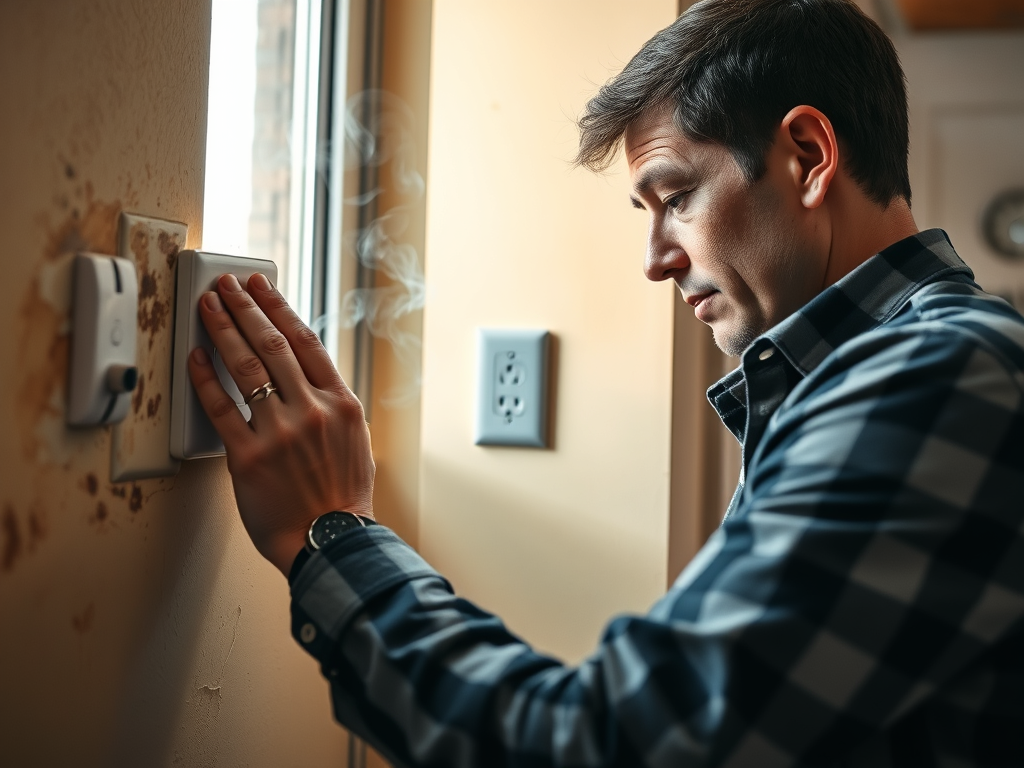
    • Wall Plates & Outlet Covers: Remove a few and check behind them. If the area behind is significantly cleaner or differently colored, it’s likely the walls were stained from smoke and cleaned or painted only on the surface.
    • Light Fixtures & Ceiling Fans: Smoke rises. Fixtures, especially on the ceiling, often trap smoke residue and develop a sticky brown film. Check inside globes and around ceiling fans.
    • Closets and Cabinets: These are often missed during quick cleans. Open them up and take a whiff. Smell is usually stronger in enclosed spaces.
    • Window Blinds & Curtain Rods: Plastic blinds, in particular, absorb nicotine and may yellow or feel sticky.
    • HVAC Vents and Returns: Look inside or remove the vent covers. Discoloration or strong odor inside ducts indicates smoke exposure. The HVAC system can circulate smoke particles throughout the home.
    • Behind Appliances: If accessible, pull out the refrigerator, stove, or washer/dryer and inspect the walls and floor for staining or odor buildup.

    Step 4: Hire a Home Inspector with Experience in Smoke Damage

    Not all home inspectors are trained to detect smoke damage. Ask yours directly if they have experience with smoked-in homes.

    An inspector can:

    • Use moisture meters or particle detectors to measure residue levels.
    • Evaluate the HVAC system for contamination.
    • Check insulation in attics or basements where cleaning is rarely done.

    Step 5: Get an Air Quality Test

    Cigarette smoke leaves behind toxic residue, including carcinogens like nicotine, formaldehyde, and heavy metals. These can linger in dust and surfaces long after smoking has stopped.

    Consider hiring an environmental specialist to perform an indoor air quality (IAQ) test. This will detect:

    • Volatile Organic Compounds (VOCs)
    • Nicotine residue
    • Particulate matter
    • Mold (smoke damage often goes hand in hand with other indoor air issues)

    Step 6: Understand the Cost of Remediation

    If the home has been smoked in, remediation may be necessary — and it’s not cheap. Cleaning alone often isn’t enough.

    Typical remediation steps include:

    • Removing and replacing carpet and padding.
    • Sealing and repainting walls with odor-blocking primer (e.g., Kilz).
    • Replacing or professionally cleaning HVAC systems and ducts.
    • Cleaning or replacing insulation in attics or crawl spaces.
    • Using ozone treatments or hydroxyl generators for deep deodorization (note: ozone can be dangerous if misused).

    Estimated Costs can range from $2,000 to over $50,000, depending on the severity and square footage.


    Step 7: Factor it Into Your Offer or Walk Away

    If you’re still interested in the home:

    • Get estimates for cleaning and remediation.
    • Use that information to negotiate the sale price.
    • Request a credit or that the seller perform remediation before closing.

    However, if the damage is extensive and health risks or cost are too high, don’t hesitate to walk away. Even a beautiful home isn’t worth risking your health or breaking your budget.


    Final Thoughts

    Purchasing a smoked-in home isn’t always a dealbreaker — but it does require due diligence, honest inspection, and a clear understanding of what it will take to make the home healthy and livable. Many sellers will go the extra mile to mask the smell or stains, but the truth often hides in the places they forget to clean: behind outlet covers, inside ceiling fixtures, or deep within ductwork.

    By taking a careful, methodical approach, you can make an informed decision — and avoid any nasty surprises after move-in day.

    Pacific Decontamination Services uses the world’s strongest, most effective and safe antimicrobial disinfectant, deodorization and chemical decontaminate. Our professional application will eliminate up to accepted levels of any allergen, germ, bacteria or fungus that it touches. AND as powerful as it is, it is also completely safe.

    What do you do next? How do you solve the challenge of mold and associated health hazards?

    Call Pacific Decontamination Services at 778-269-0208 or email us at our email address: contact @ pacificdecon dot com

    Serving All of Vancouver Island: Victoria, Cowichan, Duncan, Nanaimo, Parksville, Qualicum, Courtenay, Comox, Campbell River, and Port Alberni.

  • Health Canada Warning About Ozone Generators

    Health Canada Warning About Ozone Generators

    Canada advises against using ozone generators in homes. They are sold as indoor air cleaners, but the level of ozone they produce may harm your health. They also create other dangerous chemicals.

  • Why Mold Staining on Roof Sheathing May Not Require Removal After Treatment

    Why Mold Staining on Roof Sheathing May Not Require Removal After Treatment

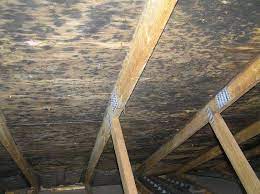
    When homeowners or inspectors find dark staining on roof sheathing in Duncan, Ladysmith, Cowichan, Nanaimo, Parksville, Qualicum, Port Alberni, Campbell River, Courtenay, or Comox, the immediate concern often turns to mold. While mold can be a serious issue under certain conditions, not all mold-related staining presents a structural or health threat, especially when properly treated.

    In this blog, we’ll explore why removing mold staining from roof sheathing is often not critical if the area has been heavily sprayed with an effective antimicrobial mold killer.


    Understanding Mold Staining vs. Active Mold Growth

    First, it’s important to distinguish between staining and active mold growth.

    • Mold staining is the residual discoloration left behind after mold spores have been killed. It’s similar to a scar—it’s evidence of a previous issue but not necessarily a current one.
    • Active mold can grow and spread, especially in environments with high moisture, poor ventilation, and organic material to feed on.

    Mold staining doesn’t continue to grow. It’s simply the visual aftermath of what was once living but is now dead.


    What Happens When Antimicrobial Mold Killers Are Applied?

    When an antimicrobial mold killer is thoroughly applied to mold-contaminated sheathing:

    1. The mold spores are rendered inactive or killed, eliminating the biological threat.
    2. The treated surface is sanitized, reducing the risk of further spread.
    3. Future growth is inhibited, especially when combined with improved moisture control.

    Our treatments are designed to penetrate porous surfaces like wood and neutralize microbial activity. Once this has occurred, the sheathing is no longer a source of airborne spores or a mold propagation site.


    Why Removing Stains Is Often Unnecessary

    1. Staining Is Cosmetic

    Once the mold is dead, staining does not pose a structural or health hazard. Removing it typically involves sanding, dry ice blasting, replacing the insulation, HEPA Vacuuming the entire area, replacing wood, or using a corrosive bleach-type substance, which can be labor-intensive and costly without improving safety or performance.

    2. Treated Wood Remains Structurally Sound

    Unless the sheathing is rotted or structurally compromised, discoloration alone does not indicate damage. Treated mold-stained wood can still function perfectly within the roof system.

    3. Inspection Standards Often Don’t Require It

    Many building inspectors and mold remediation standards accept staining as an acceptable condition post-treatment, as long as the attic is sprayed and fogged with mold killer and there’s no active mold or moisture problem.

    4. Prevention Is the Key

    The most crucial factor in mold management is preventing recurrence, not removing every visual trace. Ensure the attic is well-ventilated, leaks are sealed, and insulation is adequate.


    When Might Removal Be Necessary?

    There are exceptions. You may need to remove stained sheathing if:

    • The wood is soft, spongy, or structurally compromised.
    • The staining is accompanied by ongoing moisture intrusion.

    Conclusion

    Removal is usually unnecessary if mold staining on your roof sheathing and attic has been thoroughly treated with a high-quality antimicrobial mold killer. The staining is a visual artifact, not a health or structural risk, provided the area remains dry and ventilated.

    Focus your resources on prevention—controlling moisture, ensuring proper airflow, and monitoring the space. That’s the best defense against mold returning.


    If you’re unsure whether mold in your attic requires further action, consult Pacific Decontamination Services. But rest assured: a stained but treated roof sheathing and attic is typically no cause for alarm.

    What Can You Do?  We Can Neutralize Your Mold!

    In most situations, Pacific Decontamination Services can neutralize your mold up 99.99999%. If our spray, fog or foam can touch it, we can neutralize it.  Our services come at a fraction of the cost as compared to the expensive approaches like soda / dry ice blasting, hepa vacuuming, scrubbing, removal of insulation and deconstruction and reconstruction of the attic and roof.


    We neutralize the mold in your attic, crawl space, home, building, vehicle, or property by applying our eco-friendly, safe chemical on all surfaces and airborne, focusing our efforts on the visible mold areas. Depending on the job, we apply our formula by spray, mist, foam, or fog. We further kill all airborne mold spores in your attic. The average time of our on-site service is approximately one hour. An additional four hours is required to achieve maximum effectiveness. We ask that you stay out of the attic for approximately 5 hours in total. Read more about how we work.

    Pacific Decontamination Services uses the world’s strongest, most effective and safe antimicrobial disinfectant, deodorization and chemical decontaminate. Our professional application will eliminate up to 99.99999% of any allergen, germ, bacteria or fungus that it touches. AND as powerful as it is, it is also completely safe.

    What do you do next? How do you solve the challenge of mold and associated health hazards?

    Call Pacific Decontamination Services at 778-269-0208 or email us at our email address: contact @ pacificdecon dot com

    Serving All of Vancouver Island: Victoria, Cowichan, Duncan, Nanaimo, Parksville, Qualicum, Courtenay, Comox, Campbell River, and Port Alberni.

  • Breaking Down the Complexities of Removing Cigarette Smoke – And Why Thermal Fogging is the Final Cleaning Step You Can’t Skip

    Breaking Down the Complexities of Removing Cigarette Smoke – And Why Thermal Fogging is the Final Cleaning Step You Can’t Skip

    Cigarette smoke poses dangers in the workplace and for homeowners in Victoria, Duncan, Ladysmith, Nanaimo, Parksville, Qualicum, Port Alberni, Courtenay, Comox, Campbell River, and all of Vancouver Island.

    Cigarette smoke is one of the most persistent and frustrating odors to eliminate. Unlike one-time sources of smoke, cigarette residue builds up over time, embedding itself deep into walls, fabrics, vents, and hard-to-reach spaces. If you’ve just purchased a home with a history of smoking, or you’re prepping a rental unit for non-smoking tenants, you need a comprehensive plan to tackle the problem.

    Removing cigarette smoke is not just about masking odors—it’s about completely decontaminating the space. And that means following a specific sequence of steps, ending with thermal fogging to ensure long-term results.


    Why Cigarette Smoke Is So Difficult to Remove

    Cigarette smoke contains thousands of chemicals, including tar and nicotine, which don’t just sit on surfaces—they soak in. Over time, these contaminants:

    • Discolor walls and ceilings
    • Settle into fabrics, furniture, and flooring
    • Linger inside HVAC systems
    • Leave behind a sticky, invisible residue

    If not removed properly, the smell can resurface during humid weather or when the property is closed up.


    Step-by-Step: How to Effectively Remove Cigarette Smoke

    To fully eliminate smoke odors and restore a healthy indoor environment, here’s the process professionals follow:


    1. Ventilate the Space

    Start by opening windows and doors. Use fans or air scrubbers to flush out stale air and begin freshening the space.


    2. Remove Contaminated Materials

    Soft, porous items hold onto smoke the most. You may need to discard:

    • Carpeting and underlayment
    • Drapes or blinds
    • Upholstered furniture
    • Ceiling tiles or acoustic panels

    3. Deep Clean All Surfaces

    Scrubbing every surface is key. Use degreasers or enzymatic cleaners to wipe away sticky nicotine and tar from:

    • Walls and ceilings
    • Baseboards, doors, and trim
    • Hard flooring, tiles, and cabinetry

    4. Clean or Service HVAC Systems

    If your HVAC system has been running while people smoked indoors, it’s likely contaminated. Be sure to:

    • Replace all filters
    • Clean vents and registers
    • Professionally clean ductwork and air handler, if needed

    This stops odor from recirculating through your freshly cleaned space.


    5. Thermal Fogging – Deep Odor Neutralization

    After surface cleaning and HVAC service, it’s time for thermal fogging—a powerful final step. This process uses a heated deodorizer dispersed as a fog that:

    • Mimics the path of smoke
    • Penetrates porous materials and tight areas
    • Bonds to and neutralizes smoke particles

    Unlike other methods, thermal fogging neutralizes the odor at its source, not just on the surface.


    Why We Don’t Use Ozone Generators

    While ozone generators are sometimes marketed for odor removal, Pacific Decontamination Services does not use ozone as a deodorizing method—and here’s why:

    ⚠️ Health & Safety Risks

    Ozone is a lung irritant. It can cause respiratory issues, throat irritation, coughing, and chest pain—especially dangerous for children, the elderly, and anyone with asthma or respiratory conditions. Exposure to high ozone levels, even after the machine is turned off, can pose serious health risks.

    🧪 Chemical Reactions with Household Materials

    Ozone doesn’t just react with odor molecules—it can also react with household materials, creating harmful byproducts like formaldehyde. These secondary pollutants can linger long after the treatment ends.

    🧼 Unreliable in Smoke-Heavy Environments

    Ozone may slightly reduce surface-level odors in light situations, but it does not effectively penetrate porous materials the way thermal fogging does. It also does not clean or remove nicotine or tar residues.

    🏡 Residue-Free, Not Risk-Free

    Ozone generators leave no physical residue, which sounds great—but that doesn’t mean they’re safe. They don’t address the root cause of odor (the sticky, chemical-laden film) and may create more problems than they solve.

    That’s why we prioritize safer, proven, and more thorough methods like thermal fogging that deliver real results—without compromising your health or indoor air quality.


    6. Seal and Paint (If Necessary)

    In homes with heavy smoke saturation, sealing may be needed after cleaning and fogging. Applying an odor-blocking primer followed by fresh paint:

    • Traps any residual odor in walls
    • Prevents future bleed-through
    • Gives your space a clean, refreshed look

    Professional Results Require a Professional Process

    Cigarette smoke removal is more than just cleaning—it’s about transforming the indoor environment. Pacific Decontamination Services combines deep cleaning and thermal fogging to reduce cigarette smoke odor—without relying on harsh or risky methods like ozone.


    Ready to Clear the Air?

    If you’re tired of lingering cigarette smoke, don’t risk your health or waste time on ineffective fixes. Contact Pacific Decontamination Services today and schedule a consultation.

    You don’t have to live with the smell. Let us help you breathe easier.

    What do you do next? How do you solve the challenge of mold and associated health hazards?

    Call Pacific Decontamination Services at 778-269-0208 or email us at our email address: contact @ pacificdecon dot com

    Serving All of Vancouver Island: Victoria, Cowichan, Duncan, Nanaimo, Parksville, Qualicum, Courtenay, Comox, Campbell River, and Port Alberni.

  • How Thermal Fogging Neutralizes Smoke Odors

    How Thermal Fogging Neutralizes Smoke Odors

    After even the most meticulous post-fire cleanup, smoke odors can stubbornly linger—unless a powerful technique called thermal fogging is used.

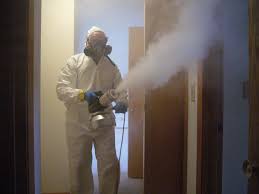
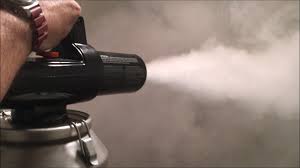
    Thermal fogging is a specialized process where a deodorizing agent is heated until it becomes a fog. This fine mist is then dispersed throughout the affected area, allowing it to reach even the most hidden nooks and crannies. Because it’s delivered as a fog, the deodorizer can penetrate soft materials and tight spaces, bonding to smoke particles and neutralizing them at the source. It’s one of the most effective methods available for eliminating smoke odors caused by fires, tobacco use, and fireplaces.

    But the value of thermal fogging goes beyond just smell.

    Smoke damage isn’t only unpleasant—it can be hazardous to your health. The lingering odor is actually a signal that microscopic smoke particles are still present in the air and on surfaces. These particles can be toxic and even carcinogenic. Breathing them in, especially over time, can lead to respiratory issues—particularly for children, seniors, or those with compromised immune systems. So while odor might be the most noticeable issue, it’s really a warning sign of something deeper. That’s why professional intervention is so important.

    One of the main advantages of thermal fogging is its deep penetration. Traditional cleaning methods can only reach surfaces. Thermal fog, on the other hand, saturates the air and absorbs into carpets, cracks, furniture, walls, and more. When combined with other essential cleaning and restoration services from Pacific Decontamination Services, it helps provide a truly comprehensive solution.

    Getting Ready for Thermal Fogging

    If you’re considering this service, here’s how to prepare your space for the fogging process:

    • Close all exterior windows and doors.
    • Shut off all open flames, including pilot lights.
    • Make sure no people or pets are inside the building during treatment.
    • Remove or securely cover any valuables or sensitive items that should not come in contact with the fog.

    Thermal fogging is a critical step in restoring your property to its pre-smoke condition. If you’re dealing with persistent smoke odors, it’s time to trust the professionals at Pacific Decontamination Services.

    Because when it comes to your health and your home—this is no time for second best.

    What do you do next? How do you solve the challenge of odor and associated health hazards?

    Call Pacific Decontamination Services at 778-269-0208 or email us!

    Serving All of Vancouver Island: Victoria, Cowichan, Duncan, Nanaimo, Parksville, Qualicum, Courtenay, Comox, Campbell River, and Port Alberni

  • Unlock an Extra $800 in CleanBC Rebates – At Almost No Cost to You

    Unlock an Extra $800 in CleanBC Rebates – At Almost No Cost to You

    Clean BC Heath and Safety Rebates for homeowners in Duncan, Cowichan, Ladysmith, Nanaimo, Parksville, Qualicum, Comox, Courtenay, Campbell River, and throughout Vancouver Island

    Dealing with Mold or Rodent Health & Safety Issues? Pacific Decontamination Services Has You Covered.

    If you’re a homeowner on Vancouver Island planning energy-efficient home upgrades through the CleanBC Energy Savings Program, there’s a valuable opportunity you might not be aware of: you could be eligible for an additional $800 Health & Safety Rebate to cover mold or rodent contamination — with costs as low as $42 out-of-pocket.

    At Pacific Decontamination Services, we work directly with your primary contractor to handle assessment, remediation, documentation, and the rebate process. Our goal is to make your renovation not only more affordable but also healthier, safer, and fully compliant with CleanBC rebate guidelines.


    Who Qualifies for the Extra $800 Rebate?

    You may qualify for this bonus rebate if your CleanBC project includes:

    • Heat pump installations
    • Ventilation system upgrades
    • Insulation improvements
    • Energy-efficient windows or doors
    • Heat pump water heaters

    During your contractor’s site inspection, if mold or rodent issues (such as feces, urine, bacteria, or nesting material) are found in attics, crawlspaces, or general living areas, you may be eligible for the additional $800 Health & Safety Rebate.


    💡 How the Process Works — Easy and Effortless

    We make the entire process seamless for homeowners:

    1. Initial Assessment: Your contractor identifies signs of contamination during their inspection.
    2. Photo Documentation: They take photos of the affected areas (attics, crawlspaces, windows, etc.).
    3. Referral: The photos are sent to Pacific Decontamination Services.
    4. Approval Process: We submit documentation to CleanBC for pre-approval.
      • You may qualify for either a 60% or 95% rebate, depending on your household income and eligibility.
    5. Remediation Work: Once approved, we perform thorough decontamination and cleanup.
    6. Project Continues: Your energy upgrade proceeds as scheduled.
    7. No Paperwork for You: We handle all billing and documentation with CleanBC, so you don’t have to.

    💰 Transparent Pricing — Just $42 for Full Remediation

    Our Standard Health & Safety Remediation Package includes:

    • Mold removal from windowsills, doors, and other high-risk areas
    • Complete remediation of attics, crawlspaces, or general interior areas
      (up to 1,200 sq ft)
    • Final reporting and documentation for CleanBC approval
    • Total package value: $840 (including GST)

    With a 95% CleanBC rebate, your cost is just $42.
    We invoice CleanBC directly, so you’ll only receive a small final invoice for your portion — no surprises, no hidden fees.


    🌿 Why Remediation Matters

    This isn’t just about qualifying for an extra rebate — it’s about ensuring the safety, health, and longevity of your home. Remediation helps:

    • Eliminate mold spores, bacteria, and harmful mycotoxins
    • Prevent the spread of contamination before it becomes a costly issue
    • Improve indoor air quality for you and your family
    • Create a safer worksite for contractors during installation

    🛠 CleanBC Health & Safety Rebate Criteria

    To qualify for the rebate, the following must apply:

    • The mold or rodent issue must be connected to a CleanBC-approved upgrade
    • Signs of contamination must be documented in related areas, such as attics being insulated or crawlspaces ventilated
    • Pre-approval from CleanBC is required before any remediation begins — and we manage this for you
    • Remediation must be completed by a CleanBC-registered contractor — and that’s us

    If your contractor notices droppings, visible mold, or signs of nesting, there’s a strong chance you qualify.

    Learn more https://www.betterhomesbc.ca/rebates/energy-savings-program-health-safety-rebates/


    👷‍♂️ Why Choose Pacific Decontamination Services?

    • Based in Nanaimo, proudly serving all of Vancouver Island
    • Fully CleanBC-registered and certified
    • Years of experience in mold and rodent remediation
    • Trusted by homeowners and contractors alike for efficient, respectful, and reliable service
    • We work directly with your CleanBC contractor to ensure a smooth, on-time upgrade process

    📞 Let’s Talk — No Obligation

    Ready to find out if you qualify for the rebate? Let’s connect — no pressure, just clear answers.

    📍 Location: Nanaimo, BC (serving all of Vancouver Island)
    📞 Phone: 778-269-0208
    ✉️ Email: contact@pacificdecon.com
    🌐 Website: www.PacificDecontamination.com


    Don’t Miss Out on Bonus Rebates, a Healthier Home, and a Safer Renovation.

    What Can You Do?  We Can Neutralize Your Mold or Rodent Infestation!

    In most situations, Pacific Decontamination Services can neutralize your mold up 99.99999%. If our spray, fog or foam can touch it, we can neutralize it.  Our services come at a fraction of the cost as compared to the expensive approaches like soda / dry ice blasting, hepa vacuuming, scrubbing, removal of insulation and deconstruction and reconstruction of the attic and roof.


    We neutralize the mold, or bacteria in your attic, crawl space, home, building, vehicle, or property by applying our eco-friendly, safe chemical on all surfaces and airborne, focusing our efforts on the visible mold areas. Depending on the job, we apply our formula by spray, mist, foam, or fog. We further kill all airborne mold spores in your attic. The average time of our on-site service is approximately one hour. An additional four hours is required to achieve maximum effectiveness. We ask that you stay out of the attic for approximately 5 hours in total. Read more about how we work.

    Pacific Decontamination Services uses the world’s strongest, most effective and safe antimicrobial disinfectant, deodorization and chemical decontaminate. Our professional application will eliminate up to 99.99999% of any allergen, germ, bacteria or fungus that it touches. AND as powerful as it is, it is also completely safe.

    What do you do next? How do you solve the challenge of mold and associated health hazards?

    Call Pacific Decontamination Services at 778-269-0208 or email us at our email address: contact @ pacificdecon dot com

    Serving All of Vancouver Island: Victoria, Cowichan, Duncan, Nanaimo, Parksville, Qualicum, Courtenay, Comox, Campbell River, and Port Alberni.

    Contact Pacific Decontamination Services today — we’ll take care of the dirty work, so you can focus on building a better home.

  • The Dangers of Mold Exposure

    The Dangers of Mold Exposure

    >The dangers of mold exposure in the workplace and for homeowners in Victoria, Duncan, Ladysmith, Nanaimo, Parksville, Qualicum, Port Alberni, Courtenay, Comox, Campbell River and all of Vancouver Island.

  • Why a Certificate of Decontamination Matters: Peace of Mind and Proof of Professionalism

    Why a Certificate of Decontamination Matters: Peace of Mind and Proof of Professionalism

    When dealing with issues like mold, rodent infestations, or bacterial and contaminant problems in Duncan, Cowichan, Ladysmith, Nanaimo, Parksville, Qualicum Beach, Port Alberni, Courtenay, Comox, Campbell River or anywhere on Vancouver Island. , addressing the problem is only part of the solution. Knowing that the work was done thoroughly and professionally is just as critical. That’s where Pacific Decontamination Services sets itself apart by providing a Certificate of Decontamination after every project. This document is more than a formality—it’s your assurance of a job well done and a valuable resource for future needs. Our Certificate of Decontamination has been successful on allowing real estate deals to continue and been accepted as proof of remediation – especially with home inspectors identifying suspected mold on the roof sheathing of attics.

    What is a Certificate of Decontamination?

    The Certificate of Decontamination is a detailed document issued upon the completion of a remediation project. It outlines:

    • The steps taken to address the contamination issue.
    • The threats neutralized, whether chemical, biological, or both.
    • The scope of the work performed, ensuring transparency and accountability.

    This certificate applies to a range of services, including mold remediation in attics, crawl spaces, and residences, as well as rodent infestation cleanup or bacterial decontamination.

    Benefits of Having a Certificate of Decontamination

    1. Proof of Professionalism
      The certificate serves as an official record that the remediation work was performed by skilled professionals. It confirms that proper protocols were followed and that the affected area is safe and clean.
    2. Peace of Mind
      Dealing with mold or contaminants can be stressful. Having a certificate that outlines the measures taken provides reassurance that the issue has been resolved effectively. You can trust that your home or workspace has been restored to a safe condition.
    3. Compliance and Documentation
      For properties under inspection or sale, the Certificate of Decontamination is often a requirement. It demonstrates to potential buyers, tenants, or inspectors that the problem has been remediated to professional standards.
    4. Transparency and Detail
      The certificate provides clarity about the scope of work performed. Whether it’s mold removal, rodent waste cleanup, or disinfecting bacteria-laden areas, the document gives a clear picture of what was done and why.
    5. Long-Term Assurance
      Even after the work is done, having detailed documentation on hand is valuable. It can help address any questions or concerns that might arise in the future about the property’s history or the quality of the remediation efforts.

    Why Choose Pacific Decontamination Services?

    At Pacific Decontamination Services, customer satisfaction and safety are our top priorities. Our Certificate of Decontamination reflects our commitment to transparency, professionalism, and thoroughness. Whether you’re dealing with mold, a rodent infestation, or other contaminant issues, we ensure that the work is completed to the highest standards—and provide documentation to prove it.

    Our Services

    A Certificate of Decontamination is more than a piece of paper—it’s a testament to the quality and care taken in addressing your contamination issues. With Pacific Decontamination Services, you not only get the expertise to handle complex problems but also the peace of mind and proof that the job was done right.

    Take the worry out of remediation—choose Pacific Decontamination Services and rest easy knowing you’re in good hands

    What Can You Do?  We Can Neutralize Your Mold or Rodent Infestation!

    In most situations, Pacific Decontamination Services can neutralize your mold up 99.99999%. If our spray, fog or foam can touch it, we can neutralize it.  Our services come at a fraction of the cost as compared to the expensive approaches like soda / dry ice blasting, hepa vacuuming, scrubbing, removal of insulation and deconstruction and reconstruction of the attic and roof.


    We neutralize the mold, or bacteria in your attic, crawl space, home, building, vehicle, or property by applying our eco-friendly, safe chemical on all surfaces and airborne, focusing our efforts on the visible mold areas. Depending on the job, we apply our formula by spray, mist, foam, or fog. We further kill all airborne mold spores in your attic. The average time of our on-site service is approximately one hour. An additional four hours is required to achieve maximum effectiveness. We ask that you stay out of the attic for approximately 5 hours in total. Read more about how we work.

    Pacific Decontamination Services uses the world’s strongest, most effective and safe antimicrobial disinfectant, deodorization and chemical decontaminate. Our professional application will eliminate up to 99.99999% of any allergen, germ, bacteria or fungus that it touches. AND as powerful as it is, it is also completely safe.

    What do you do next? How do you solve the challenge of mold and associated health hazards?

    Call Pacific Decontamination Services at 778-269-0208 or email us at our email address: contact @ pacificdecon dot com

    Serving All of Vancouver Island: Victoria, Cowichan, Duncan, Nanaimo, Parksville, Qualicum, Courtenay, Comox, Campbell River, and Port Alberni.

  • Pacific Decontamination Services: Your Partner in Long-Term Mold Prevention

    Pacific Decontamination Services: Your Partner in Long-Term Mold Prevention

    Mold prevention support for homeowners in Duncan, Cowichan, Ladysmith, Nanaimo, Parksville, Qualicum Beach, Port Alberni, Courtenay, Comox, Campbell River or anywhere on Vancouver Island. At Pacific Decontamination Services, we know that eliminating mold is only half the battle. True peace of mind comes from ensuring it doesn’t come back. That’s why we provide every customer with a customized and detailed mold prevention plan to stop mold from regrowing.

    Mold can grow in as little as 24 to 48 hours under the right conditions, so taking proactive measures is essential. To help you maintain a mold-free environment, we offer free post-decontamination support to implement preventative strategies tailored to your home or business.


    Why Prevention Matters

    Mold thrives on moisture and can spread rapidly, often before you notice any visible signs. Even after our professional mold remediation, the conditions that allowed mold to grow in the first place may come back. Without addressing these factors, mold can quickly return, bringing health risks and property damage with it.

    At Pacific Decontamination Services, we’re committed to breaking this cycle. Our prevention plans focus on addressing the root causes of mold growth, such as high humidity, poor ventilation, and lingering moisture.


    Our Customized Mold Prevention Plan

    Every property is unique, which is why we create a tailored prevention plan designed specifically for your space. This is provided to you FREE of charge at the time of our decontamination and inspection service. Here’s what our program includes:

    1. Comprehensive Moisture Control

    Moisture is the lifeblood of mold growth, so we prioritize eliminating excess water and humidity. Our approach includes:

    • Identifying and Fixing Moisture Sources: We help you locate potential problem areas, such as leaks, condensation, or areas with poor drainage.
    • Dehumidification: We recommend and assist with installing dehumidifiers to maintain indoor humidity levels between 30% and 50%.
    • Moisture Barrier Installation: For spaces like basements or crawl spaces, we suggest vapor barriers to prevent water intrusion.

    2. Enhancing Ventilation and Airflow

    Poor ventilation creates stagnant air, which traps moisture and encourages mold growth. To combat this, we focus on improving airflow by:

    • Installing or upgrading exhaust fans in kitchens, bathrooms, and laundry rooms.
    • Ensuring HVAC systems are functioning optimally to circulate air effectively.
    • Offering guidance on simple steps, such as rearranging furniture to allow better air circulation and using ceiling fans.

    3. Educating Home and Business Owners

    We believe knowledge is power. After decontamination, we work closely with you to help prevent future mold growth by:

    • Teaching you how to monitor and manage humidity levels.
    • Advising on best practices for drying spills and preventing water buildup.
    • Providing a checklist for routine inspections of high-risk areas like basements, attics, and bathrooms.

    4. Post-Decontamination Support—Free of Charge

    Our commitment to your mold-free environment doesn’t end with remediation. As part of our service:

    • We Work With You to Prevent Regrowth: You can contact us free of charge, to discuss possible new and early signs of moisture or other conditions that could lead to future mold.
    • We Offer Long-Term Recommendations: Whether it’s installing additional moisture control systems or upgrading insulation, we provide practical solutions to keep mold at bay.
    • We Provide Access to Our Experts: Have a question or concern? Our team is available to offer guidance and support whenever you need it.

    Why Choose Pacific Decontamination Services?

    Here’s what makes us the trusted choice for mold prevention:

    • Tailored Plans: No two properties are the same. Our FREE detailed prevention plans are customized to address the unique risks of your home or business.
    • Free Post-Decontamination Support: We stand by our work and provide ongoing assistance to ensure mold doesn’t return.
    • Expert Knowledge: With years of experience in mold remediation and prevention, we know how to identify and eliminate the conditions that promote mold growth.
    • Health and Safety Focus: Mold can pose serious health risks. Our prevention strategies are designed to protect your home, workplace, and loved ones.

    Stop Mold Before It Starts

    Mold is resilient, but with the right prevention plan, you can stop it from regrowing. At Pacific Decontamination Services, we’re more than a mold remediation company—we’re your partner in creating a safe, healthy, and mold-free environment.

    Contact us today to learn more about our customized prevention plans and post-decontamination support. Together, we’ll keep your space mold-free for the long term.

    What Can You Do?  We Can Neutralize Your Mold!

    In most situations, Pacific Decontamination Services can neutralize your mold up 99.99999%. If our spray, fog or foam can touch it, we can neutralize it.  Our services come at a fraction of the cost as compared to the expensive approaches like soda / dry ice blasting, hepa vacuuming, scrubbing, removal of insulation and deconstruction and reconstruction of the attic and roof.


    We neutralize the mold in your attic, crawl space, home, building, vehicle, or property by applying our eco-friendly, safe chemical on all surfaces and airborne, focusing our efforts on the visible mold areas. Depending on the job, we apply our formula by spray, mist, foam, or fog. We further kill all airborne mold spores in your attic. The average time of our on-site service is approximately one hour. An additional four hours is required to achieve maximum effectiveness. We ask that you stay out of the attic for approximately 5 hours in total. Read more about how we work.

    Pacific Decontamination Services uses the world’s strongest, most effective and safe antimicrobial disinfectant, deodorization and chemical decontaminate. Our professional application will eliminate up to 99.99999% of any allergen, germ, bacteria or fungus that it touches. AND as powerful as it is, it is also completely safe.

    What do you do next? How do you solve the challenge of mold and associated health hazards?

    Call Pacific Decontamination Services at 778-269-0208 or email us at our email address: contact @ pacificdecon dot com

    Serving All of Vancouver Island: Victoria, Cowichan, Duncan, Nanaimo, Parksville, Qualicum, Courtenay, Comox, Campbell River, and Port Alberni.


Notice: ob_end_flush(): failed to send buffer of zlib output compression (1) in /home/feediaba/wordpress.pacificdecon.com/wp-includes/functions.php on line 5481

Notice: ob_end_flush(): failed to send buffer of zlib output compression (1) in /home/feediaba/wordpress.pacificdecon.com/wp-includes/functions.php on line 5481