Tag: attic mold

  • Why Mold Staining on Roof Sheathing May Not Require Removal After Treatment

    Why Mold Staining on Roof Sheathing May Not Require Removal After Treatment

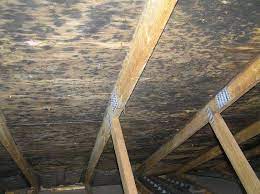
    When homeowners or inspectors find dark staining on roof sheathing in Duncan, Ladysmith, Cowichan, Nanaimo, Parksville, Qualicum, Port Alberni, Campbell River, Courtenay, or Comox, the immediate concern often turns to mold. While mold can be a serious issue under certain conditions, not all mold-related staining presents a structural or health threat, especially when properly treated.

    In this blog, we’ll explore why removing mold staining from roof sheathing is often not critical if the area has been heavily sprayed with an effective antimicrobial mold killer.


    Understanding Mold Staining vs. Active Mold Growth

    First, it’s important to distinguish between staining and active mold growth.

    • Mold staining is the residual discoloration left behind after mold spores have been killed. It’s similar to a scar—it’s evidence of a previous issue but not necessarily a current one.
    • Active mold can grow and spread, especially in environments with high moisture, poor ventilation, and organic material to feed on.

    Mold staining doesn’t continue to grow. It’s simply the visual aftermath of what was once living but is now dead.


    What Happens When Antimicrobial Mold Killers Are Applied?

    When an antimicrobial mold killer is thoroughly applied to mold-contaminated sheathing:

    1. The mold spores are rendered inactive or killed, eliminating the biological threat.
    2. The treated surface is sanitized, reducing the risk of further spread.
    3. Future growth is inhibited, especially when combined with improved moisture control.

    Our treatments are designed to penetrate porous surfaces like wood and neutralize microbial activity. Once this has occurred, the sheathing is no longer a source of airborne spores or a mold propagation site.


    Why Removing Stains Is Often Unnecessary

    1. Staining Is Cosmetic

    Once the mold is dead, staining does not pose a structural or health hazard. Removing it typically involves sanding, dry ice blasting, replacing the insulation, HEPA Vacuuming the entire area, replacing wood, or using a corrosive bleach-type substance, which can be labor-intensive and costly without improving safety or performance.

    2. Treated Wood Remains Structurally Sound

    Unless the sheathing is rotted or structurally compromised, discoloration alone does not indicate damage. Treated mold-stained wood can still function perfectly within the roof system.

    3. Inspection Standards Often Don’t Require It

    Many building inspectors and mold remediation standards accept staining as an acceptable condition post-treatment, as long as the attic is sprayed and fogged with mold killer and there’s no active mold or moisture problem.

    4. Prevention Is the Key

    The most crucial factor in mold management is preventing recurrence, not removing every visual trace. Ensure the attic is well-ventilated, leaks are sealed, and insulation is adequate.


    When Might Removal Be Necessary?

    There are exceptions. You may need to remove stained sheathing if:

    • The wood is soft, spongy, or structurally compromised.
    • The staining is accompanied by ongoing moisture intrusion.

    Conclusion

    Removal is usually unnecessary if mold staining on your roof sheathing and attic has been thoroughly treated with a high-quality antimicrobial mold killer. The staining is a visual artifact, not a health or structural risk, provided the area remains dry and ventilated.

    Focus your resources on prevention—controlling moisture, ensuring proper airflow, and monitoring the space. That’s the best defense against mold returning.


    If you’re unsure whether mold in your attic requires further action, consult Pacific Decontamination Services. But rest assured: a stained but treated roof sheathing and attic is typically no cause for alarm.

    What Can You Do?  We Can Neutralize Your Mold!

    In most situations, Pacific Decontamination Services can neutralize your mold up 99.99999%. If our spray, fog or foam can touch it, we can neutralize it.  Our services come at a fraction of the cost as compared to the expensive approaches like soda / dry ice blasting, hepa vacuuming, scrubbing, removal of insulation and deconstruction and reconstruction of the attic and roof.


    We neutralize the mold in your attic, crawl space, home, building, vehicle, or property by applying our eco-friendly, safe chemical on all surfaces and airborne, focusing our efforts on the visible mold areas. Depending on the job, we apply our formula by spray, mist, foam, or fog. We further kill all airborne mold spores in your attic. The average time of our on-site service is approximately one hour. An additional four hours is required to achieve maximum effectiveness. We ask that you stay out of the attic for approximately 5 hours in total. Read more about how we work.

    Pacific Decontamination Services uses the world’s strongest, most effective and safe antimicrobial disinfectant, deodorization and chemical decontaminate. Our professional application will eliminate up to 99.99999% of any allergen, germ, bacteria or fungus that it touches. AND as powerful as it is, it is also completely safe.

    What do you do next? How do you solve the challenge of mold and associated health hazards?

    Call Pacific Decontamination Services at 778-269-0208 or email us at our email address: contact @ pacificdecon dot com

    Serving All of Vancouver Island: Victoria, Cowichan, Duncan, Nanaimo, Parksville, Qualicum, Courtenay, Comox, Campbell River, and Port Alberni.
  • How to Avoid Condensation Problems

    How to Avoid Condensation Problems

    How to Avoid Condensation Problems in Duncan, Cowichan, Ladysmith, Nanaimo, Parksville, Qualicum Beach, Port Alberni, Courtenay, Comox, Campbell River or anywhere on Vancouver Island.

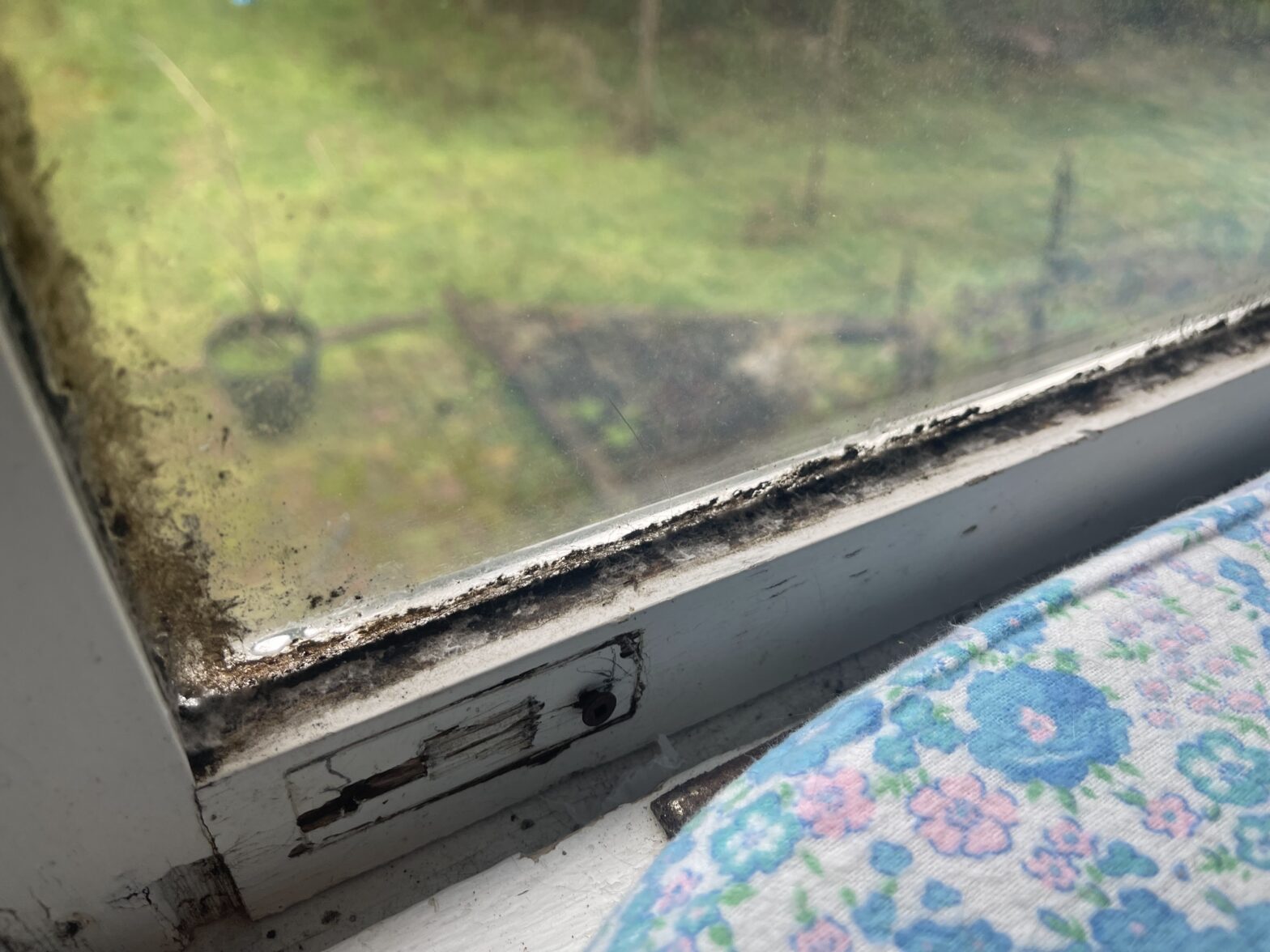
    Have you ever noticed water droplets on your window or black staining on the drywall of your walls? Have you ever wondered why the moisture returns around your windows after you have wiped it away? This type of moisture is from the interior air and is commonly referred to as condensation.

    Condensation and How Does it Form?

    Condensation occurs in your home when moist air encounters a surface at a lower temperature. Moist air contains water vapor, commonly referred to as humidity. Indoors, we can increase humidity through our activities and lifestyle. If a surface in your home is cold enough, the air in the immediate vicinity of the surface will be cooled, sometimes causing the moisture in the air to condense or change into a liquid on the surface.

    Condensation forms first on the coldest surfaces of a room, usually on glass surfaces of windows and doors. These surfaces are typically cooled by lower exterior temperatures during the winter months much more easily than the walls kept warm by insulation. For example, if it is cold enough outside and/or warm and humid enough inside, condensation may occur on or around your windows, resulting in fogging, water, or ice on the windows themselves or even a puddle of water on the window frame or sill. Other examples of condensation in your home can include damp spots or mildew on outside wall corners, closet walls, or baseboards. Areas of your home with poor air circulation, such as behind furniture or in a cupboard or closet, can also be susceptible to condensation.

    A small amount of condensation appearing on a surface may not necessarily be a problem. It depends on the amount of moisture that forms, how long it stays, and whether it accumulates on surfaces that can be damaged by water. Condensation can be short-term during a severe cold spell or occur in a localized area such as the kitchen, bathroom, or laundry room.

    In many instances, condensation moisture simply evaporates back into the air once the surfaces warm-up or the moisture source is reduced. An example is moisture that condenses on a bathroom window during a shower and quickly disappears shortly after the shower is turned off. However, as a general rule, steps should be taken to avoid condensation problems wherever possible, as moisture can lead to damage.

    Why Must I Avoid Condensation Problems?

    Simply put, you do not want MOLD to grow.  You do not want water damage.

    Condensation can cause serious damage to the interior and structural elements of your home or building. If condensation occurs frequently enough and for prolonged periods of time, materials in contact with the moisture may be damaged. Drywall and wood finishes around windows are two examples of materials in your home that can readily absorb moisture and become damaged if they remain wet for a sustained period of time. If left unchecked, condensation problems can cause:

    • crumbling or soft spots in the drywall

    • decay in wood framing or corrosion of steel framing

    • peeling paint

    • damage to the insulation inside the walls

    • mold and mildew problems in your home

    Most importantly, taking preventative steps to avoid condensation from occurring in your home will help prevent avoidable and expensive problems.

    Sources of Moisture in the Home

    We contribute to humidity levels in our homes through our activities and lifestyle. Water vapor is added to the air in large quantities by breathing, perspiration, cooking, bathing, cleaning, and other daily activities.

    How we produce humidity in our homes

    • A family of four can add moisture to the air, equivalent to 30 to 40 liters of water per week

    • Showering, cooking, bathing, and washing can add 15 to 20 liters per week

    • Drying clothes indoors can add 10 to 15 litres per week

    Newly constructed homes may temporarily exhibit a higher potential for condensation as moisture in plaster, cement, and other building materials escapes into the air during the first heating season. This elevated level of moisture in the air should taper off after a month or two. If it doesn’t, you should inform your building or maintenance manager of the situation.

    What Should the Indoor Temperature and Humidity Levels be?

    Interior temperature and relative humidity are often a matter of personal preference, but exceeding recommended humidity levels for extended periods of time can lead to a higher risk of condensation problems in your home. The recommended relative humidity level varies between winter and summer and by location. As a rough “rule of thumb,” interior air temperatures should generally be maintained between 18°C and 24°C, with relative humidity falling between 35% and 60% for the coastal temperate climate regions of British Columbia during the winter months. In colder and drier regions of the province, interior humidity levels should be limited to between 25% and 40% during the winter months. If you are unsure of the relative humidity in your home, small devices called “hygrometers” can be purchased that will allow you to measure the humidity levels.

    Humidity cannot be eliminated from the air altogether. It is needed to maintain a comfortable and healthy interior environment. Without humidity, we would suffer from chapped lips and dry skin, sore throats, breathing problems, static electricity, and damage to equipment and furniture.

    However, if the humidity gets too high, problems will arise in your home, such as condensation, musty smells, mold growth, allergic reactions, and damage to walls and interior finishes.

    How do I Avoid Mold and Condensation Problems?

    There are a number of steps that you can take to prevent condensation problems from occurring in your home.

    1) Reduce the amount of moisture or humidity generated in your home

    • Do not regularly hang large amounts of clothes to dry indoors. Wherever possible, dry your clothes in a dryer with an outside vent.

    • Shut off the humidifier if you are using one.

    • While cooking, put a lid on boiling water — it will also boil faster!

    • Try to have shorter showers. You will save the energy required to heat the water and conserve water.

    • Ensure the lint trap in your clothes dryer is clean. The lint trap should be inspected and cleaned before each use.

    • As much as possible, try to wash loads of dishes in the dishwasher.

    • Do not store wood indoors for your fireplace.

    2) Promote good air circulation in your home

    • Open blinds and drapes so air can circulate freely over the windows.

    • Direct heat towards exterior walls and windows.

    • Where condensation at windowsills is a persistent problem, remove any objects on the sill, such as books, photographs, and knickknacks, as they prevent air from circulating and removing moisture.

    • Move furniture such as sofas and bookcases so they are not touching outside walls. This will improve air circulation around the cooler outside wall and reduce condensation potential.

    3) Promote good ventilation in your home • Use the kitchen exhaust fan or range hood to remove humidity generated by cooking. Note: the exhaust fan or range hood should be vented to the outside.

    • Use bathroom fans and humidistats (if you have one) while bathing or showering. Some bathroom exhaust fans are connected to a humidistat that can be preset to ventilate the room when the humidity reaches a certain level. Keep the fan running until the humidity is below that set point. It is important that humidistats be set to the appropriate level and not turned to “off.” If the bathroom does not have a humidistat, the exhaust fan should be left running for a period of time after bathing or showering to remove the excess moisture from the bathroom. The exhaust fan should be vented to the outdoors. Some newer homes have a pre-set principal exhaust fan. Ensure that this fan is set to run for two 4-hour periods per day.

    • Open windows periodically and ensure fresh air intake vents are not blocked.

    • Make sure exterior vent hoods for your dryer, bathroom, and kitchen vents are unobstructed and operating freely. Clothes dryers that take longer to dry than usual and kitchen or bathroom fans that seem not to move the air could be signs of some obstruction in the duct or the outlet. Keeping vent hoods and lint traps clear will also reduce the energy required to dry the clothes, thus reducing utility bills. Qualified professionals should be used to carry out this maintenance item.

    • Consider upgrading your kitchen or bathroom fans. You may be right if your kitchen or bathroom fans make noise but don’t seem to do anything. Some older or cheaper units may not work effectively and tend to be noisy. A simple upgrade is relatively inexpensive and will often dramatically improve performance. Look for units with high air movement measured in cubic feet per minute (cf/m) or liter per second (L/s) and a low noise rating measured in decibels (dB) or sones. In most cases, you can address high humidity and condensation by reducing the humidity generated in your home. Ventilation may only reduce humidity levels if the air introduced into the room is drier than the interior air. When ventilation is ineffective at lowering the humidity sufficiently, you may need to incorporate a dehumidifier (or air c conditioner) to reduce humidity levels further. However, this should be considered as a last resort after you have taken the necessary steps to reduce the amount of humidity generated in your home. Also, dehumidifiers require electricity to operate and, therefore, may be an expensive option.

    Dealing with Persistent Condensation

    Problems

    Condensation is usually a localized problem that can be addressed by taking the steps described above to reduce humidity or promote good air circulation and ventilation in your home. However, if you have taken these steps and continue to experience condensation problems, other problems may exist that are more appropriately addressed by your maintenance manager or a qualified professional.

    Symptoms related to persistent condensation problems include:

    • windows that continue to have water droplets or that fog up, frost, or get ice build-up, even after you have taken necessary steps to lower humidity levels and prevent condensation in your home

    • black staining on the inside of walls, mainly in corners and near the floor or ceiling

    • mold or mildew growth

    • ice or frost under roof sheathing boards

    • delamination of plywood materials

    • damp or moist basement walls or floors.  Persistent condensation problems may relate to air leakage in your home, typically at the base of the wall (sometimes causing black staining at carpet edges), electrical lighting and receptacle outlets, and around windows and doors. This air leakage can allow cold air into the wall assembly, thus cooling the wall and increasing the potential for condensation. In other cases, it may be necessary to bring warm air to cold surfaces by changing the building’s heating patterns or providing dedicated heat sources to problem areas.

    Blowing warm air at problem areas has the additional effect of encouraging evaporation at the problem location. In some cases, the solution may be to insulate surfaces against cold temperatures, usually by increasing insulation levels in the walls behind the problem areas.

    However, the solutions to each of these potential problems should be carried out by qualified professionals.

    Action Plan Tips – Decontaminate the Mold: Call Pacific Decontamination Services

    After decontamination treatment by Pacific Decontamination Services

    • Take steps to avoid further condensation problems in your home:

    • Reduce the amount of moisture or humidity generated in your home. For example, do not hang

    laundry to dry indoors and take shorter showers.

    • Promote good air circulation in your home. For example, open blinds and drapes and move furniture to avoid touching an outside wall.

    • Promote good ventilation in your home. For example, use kitchen exhaust fans, bathroom fans and humidistats, and consider upgrading your exhaust fans if they are performing poorly.

    • If a persistent condensation problem becomes evident (after taking the above steps), a qualified professional may be needed to address the underlying cause of this problem.

    What Can You Do?  We Can Neutralize Your Mold!

    In most situations, Pacific Decontamination Services can neutralize your mold up 99.99999%. If our spray, fog or foam can touch it, we can neutralize it.  Our services come at a fraction of the cost as compared to the expensive approaches like soda / dry ice blasting, hepa vacuuming, scrubbing, removal of insulation and deconstruction and reconstruction of the attic and roof.


    We neutralize the mold in your attic, crawl space, home, building, vehicle, or property by applying our eco-friendly, safe chemical on all surfaces and airborne, focusing our efforts on the visible mold areas. Depending on the job, we apply our formula by spray, mist, foam, or fog. We further kill all airborne mold spores in your attic. The average time of our on-site service is approximately one hour. An additional four hours is required to achieve maximum effectiveness. We ask that you stay out of the attic for approximately 5 hours in total. Read more about how we work.

    Pacific Decontamination Services uses the world’s strongest, most effective and safe antimicrobial disinfectant, deodorization and chemical decontaminate. Our professional application will eliminate up to 99.99999% of any allergen, germ, bacteria or fungus that it touches. AND as powerful as it is, it is also completely safe.

    What do you do next? How do you solve the challenge of mold and associated health hazards?

    Call Pacific Decontamination Services at 778-269-0208 or email us at our email address: contact @ pacificdecon dot com

    Serving All of Vancouver Island: Victoria, Cowichan, Duncan, Nanaimo, Parksville, Qualicum, Courtenay, Comox, Campbell River, and Port Alberni.

  • Myths About Attic Mold

    Myths About Attic Mold

    Do you live near Duncan, Ladysmith, Nanaimo, Parksville, Qualicum Beach, Port Alberni, Courtenay, Comox, or Campbell River? Would you like to know the facts and myths about mold in your attic? If you have ever ventured into your attic, you may have discovered a moldy surprise. Most homeowners first do an internet search, which will likely provide inaccurate search results that will only cause you to panic. Let us help you clear up a few myths about removing mold from an attic so you can understand what you are up against when you find attic mold and make an informed decision about the next steps.

    Here are a few myths about attic mold and attic mold removal you should know before hiring a professional mold removal company to remediate your attic.

    Myth: You must replace the attic insulation.

    False: The truth is mold cannot grow on insulation- which is man-made; it can only grow on something organic. The replacement of attic insulation is required if the attic insulation is old, the wrong type, or compromised by pests. Another reason you may have to replace the insulation in the attic is many mold removal companies use a method called “dry ice or soda blasting,” which puts a lot of debris in the insulation, rendering it useless. Pacific Decontamination Services uses a method of spray and fog on the sheathing, trusses, top of the insulation, and everything airborne to kill the mold, mold spores, and mycotoxins. The overspray does not damage the insulation, keeping it intact.

    Myth: Painting the attic is an effective method of mold removal and a cheaper method of attic mold removal

    False: Never allow anyone to paint your attic. Moisture becomes trapped between the wood and the paint, and mold will continue to grow. Eventually, it begins to chip off, and the only way to remove the mold at this point is to completely replace the boards, which will eventually cost you tens of thousands of dollars.

    Myth: Mold in your attic can affect your air quality.

    False: If your ceiling is structurally sound and the attic hatch is properly sealed, there should be no airflow from the attic into the rest of your home, thus not impacting your indoor air quality.

    Myth: Attic Mold can only be caused by a leak in the roof.

    False: Attic mold is caused by excess moisture due to one or a combination of reasons:

    Poor or Improper Ventilation includes a lack of roof vents, soffit vents, and/or blocked soffit vents by insulation or wood.

    Improperly Installed Exhaust Ducts: Ducts from the bathroom, kitchen, or laundry venting directly into the attic rather than outside, uninsulated exhaust ducts.

    Insulation: Inadequate quality insulation, too little or too much insulation, compromised insulation by animal infestation (usually mice) or displaced by contractors.

    Roof leaks

    Improperly installed pot lights

    Ice damming

    What We Do – We Also Neutralize All Airborne and Surface Mold Spores

    In most situations, Pacific Decontamination Services can neutralize your mold up 99.99999%. If our spray, fog or foam can touch it, we can neutralize it.  Our services come at a fraction of the cost as compared to the expensive approaches like soda / dry ice blasting, hepa vacuuming, scrubbing, removal of insulation and deconstruction and reconstruction of the attic and roof.

    We neutralize the mold in your attic, crawl space, home, building, vehicle, or property by applying our eco-friendly, safe chemical on all surfaces and airborne, focusing our efforts on the visible mold areas. Depending on the job, we apply our formula by spray, mist, foam, or fog. We further kill all airborne mold spores in your attic. The average time of our on-site service is approximately one hour. An additional four hours is required to achieve maximum effectiveness. We ask that you stay out of the attic for approximately 5 hours in total. Read more about how we work.

    Pacific Decontamination Services uses the world’s strongest, most effective and safe antimicrobial disinfectant, deodorization and chemical decontaminate. Our professional application will eliminate up to 99.99999% of any allergen, germ, bacteria or fungus that it touches. AND as powerful as it is, it is also completely safe.

    What do you do next? How do you solve the challenge of mold and associated health hazards?

    Call Pacific Decontamination Services at 778-269-0208 or email us at our email address: contact @ pacificdecon dot com

    Serving All of Vancouver Island: Cowichan, Duncan, Nanaimo, Parksville, Qualicum, Courtenay, Comox, Campbell River, and Port Alberni

  • The Case for Leaving Mold Staining on Attic Roof Sheathing: Cosmetic Considerations Post-Decontamination

    The Case for Leaving Mold Staining on Attic Roof Sheathing: Cosmetic Considerations Post-Decontamination

    The discovery of mold in the attic can be a cause for concern for homeowners in Duncan, Cowichan, Nanaimo, Parksville, Qualicum, Port Alberni, Courtenay, Comox, Campbell River and Vancouver Island, triggering a cascade of worries about structural integrity, indoor air quality, and the overall health of a home. However, in certain scenarios, leaving mold staining on roof sheathing in an attic after decontamination may be a reasonable and pragmatic choice. In this blog, we’ll explore why cosmetic considerations post-decontamination could lead homeowners to embrace the idea of retaining mold staining as a part of their attic’s history.

    Understanding Cosmetic Mold Staining:

    Mold staining on attic roof sheathing is often a visual aftermath of a prior mold infestation. Once the mold has been neutralized through decontamination, the staining becomes more of a cosmetic issue rather than an active threat to the structure or occupants’ health.

    Reasons to Consider Leaving Mold Staining:

    1. Structural Integrity Preserved:
    1. If the mold infestation has been effectively neutralized, and subsequent inspections confirm the structural integrity of the attic’s roof sheathing, the need for aggressive removal diminishes. In such cases, leaving the staining may not compromise the overall stability of the structure.
    1. Cost-Efficiency and Budget Considerations:
    1. Complete removal of mold staining can be a costly endeavor. Homeowners facing budget constraints might find that prioritizing decontamination over thorough stain removal is a practical choice, especially when the staining is not affecting the attic’s functionality or aesthetics significantly.
    1. Hidden or Less Visible Areas:
    1. Attic spaces, particularly the roof sheathing, may not be readily visible or accessible. If the staining is confined to areas that are not part of the living space and do not impact the overall appearance of the home, homeowners might choose to focus on decontamination while accepting the cosmetic remnants.
    1. Environmental Sustainability:
    1. Aggressive removal methods often involve the use of chemicals (many times corrosive chemicals with VOC’s) and can contribute to environmental impact. Opting to leave mold staining aligns with a more sustainable approach, minimizing resource consumption and reducing the ecological footprint associated with remediation.

    In conclusion, leaving mold staining on roof sheathing in an attic after decontamination can be a valid choice, particularly when the mold has been neutralized, and the staining is deemed cosmetic. Homeowners should carefully consider factors such as structural integrity, budget constraints, environmental sustainability, and the overall visibility of the staining when making this decision. Consulting with mold remediation professionals can provide tailored advice, ensuring that homeowners strike a balance between practicality and aesthetics in their attic spaces

    What Can You Do?  We Can Neutralize Your Mold!

    In most situations, Pacific Decontamination Services can neutralize your mold up 99.99999%. If our spray, fog or foam can touch it, we can neutralize it.  Our services come at a fraction of the cost as compared to the expensive approaches like soda / dry ice blasting, hepa vacuuming, scrubbing, removal of insulation and deconstruction and reconstruction of the attic and roof.


    We neutralize the mold in your attic, crawl space, home, building, vehicle, or property by applying our eco-friendly, safe chemical on all surfaces and airborne, focusing our efforts on the visible mold areas. Depending on the job, we apply our formula by spray, mist, foam, or fog. We further kill all airborne mold spores in your attic. The average time of our on-site service is approximately one hour. An additional four hours is required to achieve maximum effectiveness. We ask that you stay out of the attic for approximately 5 hours in total. Read more about how we work.

    Pacific Decontamination Services uses the world’s strongest, most effective and safe antimicrobial disinfectant, deodorization and chemical decontaminate. Our professional application will eliminate up to 99.99999% of any allergen, germ, bacteria or fungus that it touches. AND as powerful as it is, it is also completely safe.

    What do you do next? How do you solve the challenge of mold and associated health hazards?

    Call Pacific Decontamination Services at 778-269-0208 or email us at our email address: contact @ pacificdecon dot com

    Serving All of Vancouver Island: Victoria, Cowichan, Duncan, Nanaimo, Parksville, Qualicum, Courtenay, Comox, Campbell River, and Port Alberni.

  • Home Inspection Finds Mold In Attic Nanaimo

    Home Inspection Finds Mold In Attic Nanaimo

    What To Do When a Home Inspection During a Real Estate Transaction Finds Mold in the Attic

    Whether you’re buying or selling a home in Victoria, Cowichan, Duncan, Nanaimo, Parksville, Qualicum, Port Alberni, Courtenay, Comox, or Campbell river, mold is a fact of life. Mold spores are floating in the air all around us. They don’t “grow” until they can attach themselves to a moist surface. Attic mold tends to go undetected because the attic’s not a place a homeowner spends much time hanging around in – so when attic mold turns up on a home inspection, it’s often a surprise to both buyer and seller.

    If you find mold in the attic, first, relax. Mold in these areas isn’t a significant factor in indoor air quality, and truthfully, most molds are relatively harmless to humans. Visible mold is ready to be remedied and doesn’t require costly testing. What you don’t want to do is leave mold untreated, because the materials the mold has attached to can cause issues with timber and framing integrity. In the attic, mold can degrade drywall, spread to the ceiling below, and even cause problems with your roof’s life expectancy. Facts About Mold Click Here

    CAUSES OF ATTIC MOLD

    Attic mold occurs in the attic primarily due to the accumulation of moisture from condensation in the gap your attic fills between your warm house and the cold air outside your roof. Improper ventilation in the attic is actually worse in newer homes.

    Mold can also grow in the attic when a home has been built during Vancouver Island’s wet months. If interior wood framing and plywood had not been sufficiently dried before adding drywall and roofing material, moisture could be trapped inside.

    Other factors that can contribute to attic mold are improperly vented combustion appliances like the stove or dryer; improperly venting kitchen or bathroom fans; improperly installed rain gutters; or a leaking roof.

    ERADICATING MOLD IN THE ATTIC

    It is just as important to fix the moisture problem as it is killing the mold.

    If you don’t correct the cause of the moisture-inducing environment mold will return. For attics, the key to correcting the cause is to consider hiring a professional to design and install the proper attic ventilation plan. Continually moving the air through the attic will keep condensation – and mold growth – at bay. Ensure enclosed attics, and enclosed rafter spaces have cross-ventilation for each separate area. Outside air enters into the attic space from intake vents, soffits, eave vents, roof-top edge venting or gable end-vents, passing through the attic displacing warm, moisture-laden air, which exits the attic via exhaust vents at or near the peak of the roof. Other site-specific fixes include repairing a leaking roof or fixing improperly vented appliances and exhaust fans.

    PACIFIC DECONTAMINATION SERVICES WILL NEUTRUALIZE YOUR MOLD, SPORES AND MYCOTOXINS IN YOUR ATTIC.
    We issue a CERTIFICATE OF DECONTAMINATION

    Pacific Decontamination Services can neutralize your mold up 99.99999%. If our spray, fog or foam can touch it, we can neutralize it. Our services come at a fraction of the cost as compared to the expensive approaches like soda / dry ice blasting, hepa vacuuming, scrubbing, removal of insulation and deconstruction and reconstruction of the attic and roof.

    We then issue a Certificate of Decontamination that seller can provide to the prosective buyer.

    Pacific Decontamination Services uses the world’s strongest, most effective and safe antimicrobial disinfectant, deodorization and chemical decontaminate. Our professional application will eliminate up to 99.99999% of any allergen, germ, bacteria or fungus that it touches. AND as powerful as it is, it is also completely safe.

    What do you do next? How do you solve the challenge of mold and associated health hazards?

    Call Pacific Decontamination Services at 778-269-0208 or email us at our email address: contact @ pacificdecon dot com

    Serving All of Vancouver Island: Victoria, Cowichan, Duncan, Nanaimo, Parksville, Qualicum, Courtenay, Comox, Campbell River, and Port Alberni.

  • Mold in Attics: When to Remove Roofing

    Mold in Attics: When to Remove Roofing

    Homeowners in Nanaimo, Victoria, Duncan, Parksville, Qualicum, Courtenay, Campbell River, Port Alberni and all other locations on Vancouver Island many times ask the question: When do I need to remove the roofing because of mold contamination?

    Do we need to remove the roof or perform other demolition to clean or remove attic, cathedral ceiling, or other roof cavity mold contamination? Here we explain when a roof tear-off is justified as part of an attic or roof mold cleanup project (rarely) and when roof tear-offs are not justified.

    ATTIC MOLD When to Tear Off the Roof

    How does one determine if the roof should come off to remove attic mold contamination?

    Generally, tearing off a roof and roof sheathing and perhaps roof framing, to remove mold would not be sensible nor cost-justified.

    Mold growth, provided it is not just cosmetic mold which can simply be left alone, can be neutralized from all surfaces by Pacific Decontamination Services

    Lots of protruding nails through a roof deck preclude wiping or scrubbing the roof decking surface and media blasting might be appropriate in some situations.

    Watch out: do not launch a costly attic or under-roof mold cleanup job for harmless or cosmetic mold growths. Most of the time, Pacific Decontamination Services can help with a much more affordable option.

    Do We Need to Sand or Blast the Roof Surface to Remove Mold?

    Sanding wood building surfaces such as plywood or tongue and groove roof sheathing, wall sheathing, or wood framing is usually unnecessary and inappropriate. Furthermore, sanding a roof deck is almost impossible because of the interference from protruding nails. Media blasting (below) works on these surfaces.

    Do we have to sand or clean moldy wood to remove all traces of mold stains?

    No. Any stains that remain on wood surfaces after cleaning are harmless (usually sterile hyphae remaining below the wood surface).

    Fixing the cause of mold is an essential part of any mold cleanup job

    At the time of cleaning off mold, it is essential that the cause of mold growth be corrected as well, or mold growth will probably return, regardless of whether any stained surfaces were left from the prior cleaning.

    Should I use a biocide or fungicide during roof mold cleanup?

    Use of fungicidal encapsulants may reduce but not eliminate the risk of future mold growth, primarily, or more lastingly because such encapsulants reduce the future uptake of moisture in the wood materials.

    We neutralize mold from roof framing and sheathing;

    So when is a Roof Tear Off Necessary if I’ve got a Moldy Attic or Cathedral Ceiling?

    When the roof sheathing is rotted or damaged, or when other structural repairs are needed, a tear-off is unavoidable.

    When attic surfaces or insulation contain a large reservoir of toxic or allergenic mold, AND if the area were inaccessible, say because the space is too small to enter, then it may be necessary to either fog the area or remove some portion of roofing to give access for remediation, particularly if there is evidence of transmission of problem mold from that space into the living area.

    How to Remove, Eliminate and Remediate Mold in Attics in Victoria, Duncan, Nanaimo, Parksville, Qualicum, Port Alberni, Comox, Courtenay, and Campbell River

    Pacific Decontamination Services neutralize your mold by applying our eco-friendly, safe chemical into your attic. Depending on the job, we apply our formula by spray and fog. We do not use a tent. The average time of our on-site service is approximately one hour. An additional four hours is required to achieve maximum effectiveness. We ask that you stay out of the premise for approximately 4 hours in total. Read more about how we work.

    Pacific Decontamination Services uses the world’s strongest, most effective and safe antimicrobial disinfectant, deodorization and chemical decontaminate. Our professional application will eliminate up to 99.9999% of any allergen, germ, bacteria or fungus that it touches. AND as powerful as it is, it is also completely safe.

    What do you do next? How do you solve the challenge of mold and associated health hazards?

    Call Pacific Decontamination Services at 778-269-0208 or email us!
    Serving All of Victoria, Duncan, Nanaimo, Parksville, Qualicum, Port Alberni, Comox, Courtenay, Campbell River, and all of Vancouver Island: