Mold inspection and testing for homeowners in Victoria, Cowichan, Duncan, Nanaimo, Parksville, Qualicum, Courtenay, Comox, Campbell River, and Port Alberni.
Mold is a type of fungus that often looks like fuzzy spots of different colors, including green, gray, or black. More than 100,000 mold species have been identified. Exposure to molds can be linked to negative health effects, depending on the type of mold and the health status of the person.
You may have heard or read about
“toxic mold.” Actually, molds themselves are not toxic or poisonous.
You may have heard or read about
“toxic mold.” Actually, molds themselves are not toxic or poisonous. However,
there are mold species that are “toxigenic,” meaning they produce mycotoxins
(myco- is a prefix that means fungal). These mycotoxins are chemical byproducts
of metabolic processes – any process performed to maintain life, such as
converting food into energy or cellular respiration. Some mycotoxins can cause
a toxic response in humans and animals, even in small amounts. Hidden
dangers of mold.
Molds reproduce by creating spores
that can be too small for the naked eye to see. The spores vary in shape and
range from 2 to 100 microns in size (for comparison, a strand of a human hair
ranges from 17 to 181 microns in diameter). Molds release the reproductive
spores, which can spread through the air, water, or on animals. Mold spores can
cause health issues by triggering allergies or asthma attacks.
When mold spores land on a damp spot
indoors, they may begin growing and digesting whatever they are growing on to
survive. Molds can reproduce in any moist place. They can grow on wood, paper,
carpet, foods and other surfaces.
General mold categories
Mold species are generally categorized
as one of three types:
1. Allergenic
– Unlikely to cause illness (though it may aggravate mild allergies)
2. Pathogenic
– Can cause infection in people who are immunocompromised
3. Toxigenic
– Toxic to all humans and animals who come in contact with it
Allergenic molds
Everyone breathes in airborne mold
spores, but some have an allergic reaction or experience asthma symptoms. Airborne
mold spores can get into the nose, causing similar symptoms to other common
airborne allergens, such as sneezing, itching, runny nose, congestion and dry
skin. Mold spores can also enter the lungs, triggering an asthmatic episode.
Everyone breathes in airborne mold
spores.
The most common molds whose spores can
act as allergens include:
• Alternaria
– This genus of molds comprises approximately 50 mold species. It is a common
outdoor mold, and its spores are a common allergen. Alternaria species often
appear as dark gray spots. The mold genus can grow indoors, especially damp
surfaces with a food source, such as wood. The most common Alternaria species
are A. tenuissima and A. alternate. A. alternate is often found growing on the
following indoor materials if they are damp: iron, tiles, bricks, plaster,
wallpaper, paper, and canvas.2
• Aspergillus
– This genus of mold grows worldwide and is one of the most commonly occurring
molds in hospitals. Its spores can trigger an allergic reaction in some people.
Aspergillus is so abundant that it is probably impossible to avoid breathing in
at least some of its spores. For most people with healthy immune systems,
breathing Aspergillus is not harmful. There are a few species of the genus that
can cause serious illness when inhaled by people who are immunocompromised,
have a lung disease such as COPD, or have asthma. The range of health issues
Aspergillusmay cause is known as aspergillosis. Some people will have a severe
allergic response to inhaling spores of the species Aspergillus fumigatus. This
immune response is called allergic bronchopulmonary aspergillosis (ABPA), which
causes airway inflammation.3
• Cladosporium
– The Cladosporium genus is one of the most widespread molds. Its spores can
act as allergens, triggering reactions in sensitive people. C. herbarum is the
most commonly identified allergenic species of Cladosporium.4 Indoors,
Cladosporium is common on wet building materials, such as gypsum board, acrylic
painted walls, wood, wallpaper, carpet and mattress dust, HVAC fans, and wet
insulation in mechanical cooling units.5
• Penicillium
– This mold genus includes hundreds of species, some of which are used to
produce the antibiotic penicillin. It is a blue-green mold that many people
have seen growing on food. Some Penicillium species produce airborne spores
that can act as allergens and asthma triggers for sensitive people.6
Other common molds that produce spores
that can act as allergens include the genera Epicoccum, Fusarium,
Helminthosporium, Mucor, Rhizopus, and Pullularia.
Pathogenic molds
A pathogenic mold is one that can
cause an infection in humans, even if they are in good health. Some genus of
molds include species that fall into the allergenic category, as well as
species categorized as pathogenic. One such example is the Aspergillus genus.
This genus includes several allergenic species, as well as one very pathogenic
species, fumigatus.
A pathogenic mold is one that can
cause an infection in humans, even if they are in good health.
The most common pathogenic molds
include:
• Aspergillus
species: A. fumigatus and A. flavus – A. fumigatus is the most prevalent
species of the genus and is the leading cause of invasive aspergillosis and can
cause chronic pulmonary infections. Although airborne A. flavus is more
prevalent in some hospitals and locations, it is far less studied than A.
fumigatus. A. flavus is also known to produce mycotoxins.7
• Cryptococcus
neoformans – This mold lives in environments worldwide. People can develop an
infection after inhaling its spores, although it is extremely rare for those
with healthy immune systems. If an immunocompromised person inhales spores,
they can stay in the body and cause a later infection if the immune system
becomes even weaker. Most cases of cryptococcal meningitis (a form of fungal
meningitis) are linked to C. neoformans.8
• Histoplasma
capsulatum – H. capsulatum causes the infectious disease histoplasmosis. It’s
acquired by inhaling airborne H. capsulatum spores. Inhaled spores can also
cause a lung infection (pneumonia). Those with a weakened immune system risk
the infection spreading throughout the body which can be life-threatening. This
mold is usually found in soil; however, it is also found where there are bat
and bird droppings. Spores usually become airborne from soil disturbances like
digging or building demolition. Outbreaks are most often caused by large-scale
construction projects.9
Toxigenic molds
The toxigenic molds are the misnamed
“toxic mold” species that may create the chemical metabolic byproducts called
mycotoxins, which can cause a toxic response in humans and animals. Mycotoxins
are separate from the spores molds produce for reproduction. However, these
chemicals can become airborne and travel with mold spores. Researchers have
also demonstrated that mycotoxins also travel through the air on very small
particles of dust or tiny pieces of wallpaper, which can easily be inhaled.10
Mycotoxins travel through the air on
very small particles of dust or tiny pieces of wallpaper, which can easily be
inhaled.
It should be noted that the presence
of a toxigenic mold species does not necessarily mean the presence of
mycotoxins. Also, it’s not possible to know if a mold is producing mycotoxins
just by looking at it.11
Some of the most commonly found
toxigenic molds found growing indoors include:
• Fusarium
species: F. solani, F. oxysporum, F. moniliforme12
• Penicillium
species:P. brevicompactum, P. chrysogenum, P. citrinum, P. corylophilum, P.
cyclopium, P. expansum. P. fellutanum, P. spinulosum, andP. viridicatum13
• Aspergillus
species: A. versicolor, A. niger and A. flavus14
• Stachybotrys
chartarum –This is the notorious “black mold” that is often referenced in the
media. Learn more about Stachybotrys chartarum.
What you can do about mold in your
home
The best way to control mold growth is
to control moisture.
Mold Testing and Inspection
Our Mold Inspection Service is a Combination of Initial Inspection and Testing
We Perform 7
Types of Mold Testing Options With Our Initial Inspection:
Our prices are significantly less than
any other mold testing and inspection business in Victoria, Duncan, Cowichan,
Nanaimo, Parksville, Qualicum, Courtenay, Comox, Port Alberni and Campbell
River.
- Instant Results – Surface Sampling for Black
Mold (Viable and Non-Viable)
- 24 hr Results Air/Surface Sampling for Living
Mold (Viable)
- Air Sampling for Mold (Viable and/or
Non-Viable) – Laboratory Analysis
- Surface Sampling for Mold (Species
Identification) – Laboratory Analysis
- DNA sampling (ERMI Test) for Mold – Laboratory
Analysis
- Instant Results – Surface Bacteria (Including
Mold) Testing for ATP (Adenosine
Triphosphate)
- Instant Results – Air Laser Particulate
Counter Testing – Air Quality Assessment
Other actions you can take:
In most situations,
Pacific Decontamination Services can neutralize your mold up 99.99999%. If our
spray, fog or foam can touch it, we can neutralize it. Our services come
at a fraction of the cost as compared to the expensive approaches like soda /
dry ice blasting, hepa vacuuming, scrubbing, removal of insulation and
deconstruction and reconstruction of the attic and roof.
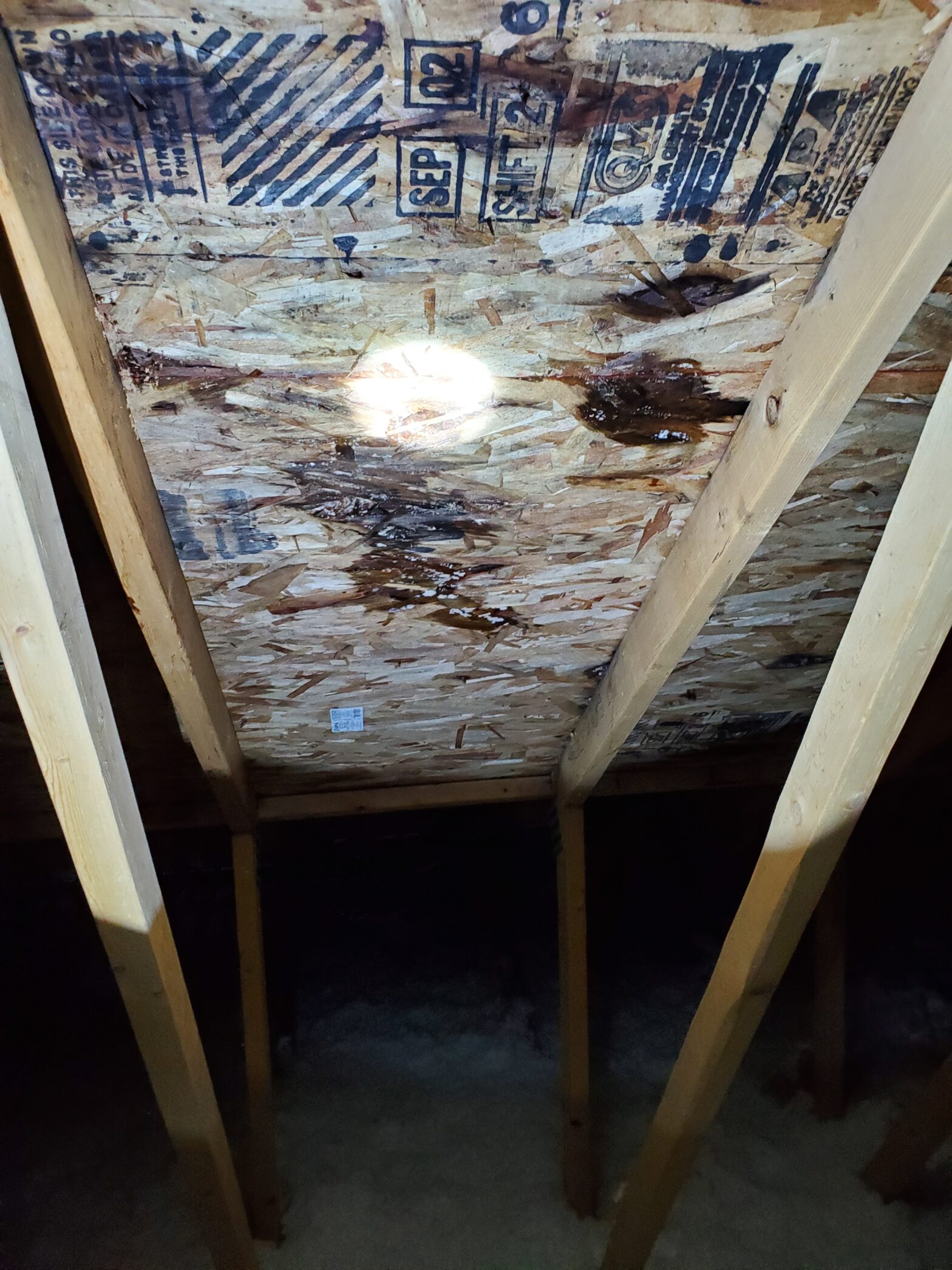
We neutralize the mold in your attic, crawl or building by applying our
eco-friendly, safe chemical everywhere within your attic, focusing our efforts on
the visible mold areas. Depending on the job, we apply our formula by spray,
mist, foam, or fog. We further kill all airborne mold spores in your attic. The average
time of our on-site service is approximately one hour. An additional four hours
is required to achieve maximum effectiveness. We ask that you stay out of the
attic for approximately 5 hours in total. Read more about how
we work.
Pacific Decontamination Services uses the world’s strongest, most effective and safe antimicrobial disinfectant, deodorization and chemical decontaminate. Our professional application will eliminate up to 99.9999% of any allergen, germ, bacteria or fungus that it touches. AND as powerful as it is, it is also completely safe.
What do you do next?
How do you solve the challenge of mold and associated health hazards?
Call Pacific
Decontamination Services at 778-269-0208 or email
us!
Serving All of
Vancouver Island: Victoria, Cowichan, Duncan, Nanaimo, Parksville, Qualicum,
Courtenay, Comox, Campbell River, and Port Alberni.