Tag: nanaimo mold

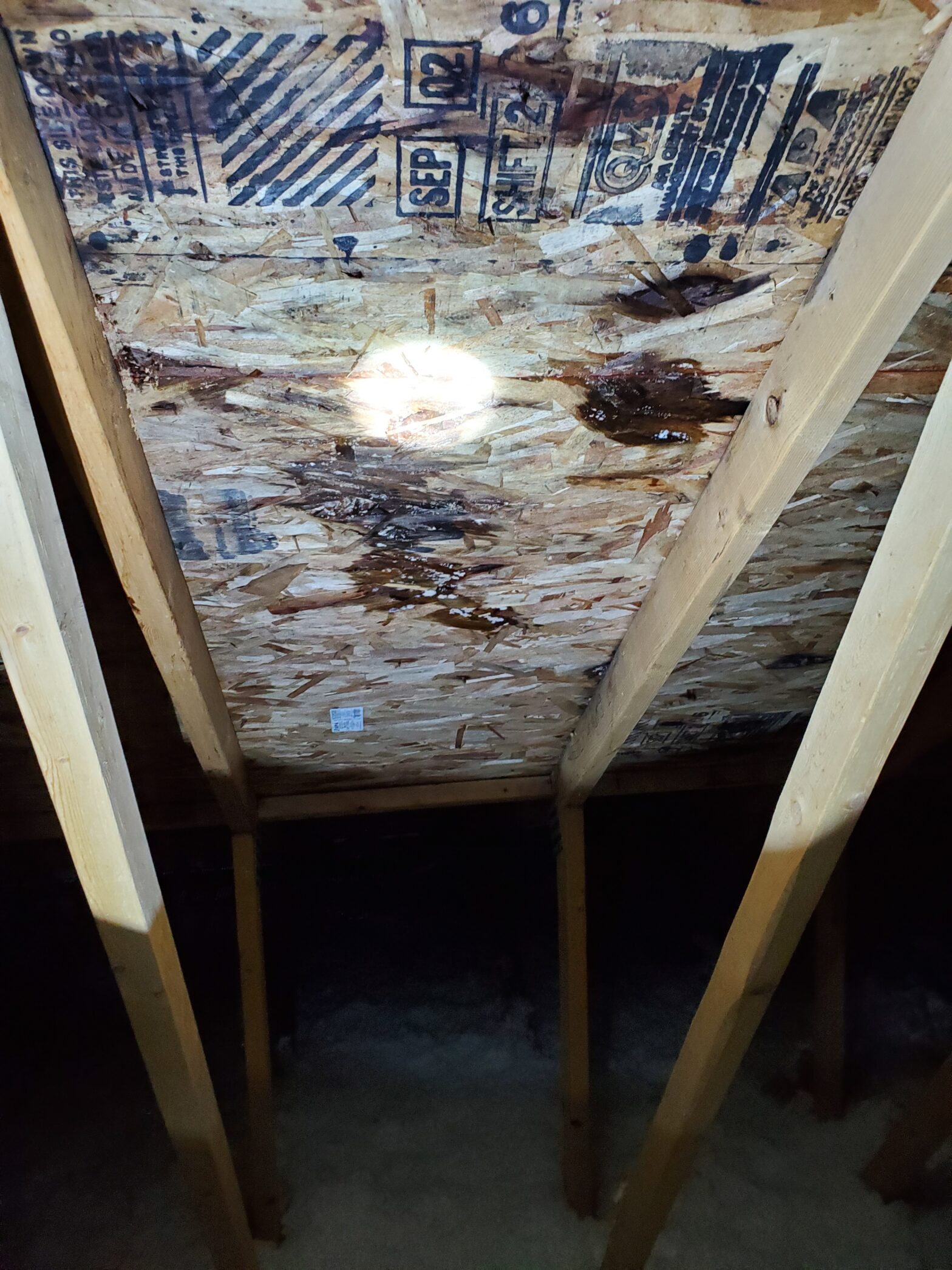
  • Home Inspection: Mold Found in Attic – Deal Breaker?

    Home Inspection: Mold Found in Attic – Deal Breaker?


    Mold is one of the big fear items that home buyers in Victoria, Cowichan, Duncan, Nanaimo, Parksville, Qualicum, Courtenay, Comox, Campbell River, and Port Alberni ask about during the home inspection process. Simply put if you see mold in a home there is a moisture issue.

    Once the source of the moisture is addressed and the mold is remediated by a qualified professional it won’t come back. It’s that simple. Mold needs moisture to grow.

    Is mold in my home a problem?

    It can be if left undressed. Again, mold in a building means you have a water problem. Dry buildings do not have mold problems. Focus on solving the water problem, then decontaminating the mold. If you do not solve the water problem you will be in an endless cycle of never ending mold.

    Is mold harmful to my health?

    The short answer is No. The long answer is it can be with prolonged exposure. However, we have very little science to prove that mold exposure in buildings can affect human health and a great deal of evidence to suggest it can’t.

    Mold in attic spaces.

    If we look at mold in our attic spaces it is not likely an indoor air quality issue. Air rises through the lower levels of the home and up through the attic. Mold spores do not travel against this air flow so most of this air will make it’s way out of an upper roof cavity or vent.

    If you were to find mold in your crawlspace it is much more likely that that air is going to contribute to the interior air we breathe in. Simply put, we breath the air that is below our home.

    Why does mold grow in my attic space?

    Think about when you take a shower. The warmer air from inside the shower will meet the cooler air from in the room and you will end up with condensation on your bathroom mirror. The same is true for your attic space. During the winter months your roof is very cold. If the warmer interior air from your home migrates into your attic space you will end up with condensation on your roof sheathing, which will lead to mold.

    Why is Mold in my attic a problem?

    Although mold in your attic does not lead to indoor air quality issues, it can lead to deterioration of your roof structure. Once again, if the moisture issue is not addresses the mold will continue to grow and spread and will come up each time the home is inspected in the future.

    There are three areas that lead to condensation in attic spaces:

    Not enough ventilation that will allow the outside air to keep the attic air the same temperature.

    Not enough insulation to keep the warmer air from the home from moving into the attic space.

    All ceiling penetration sealed to prevent further heat loss into the attic space.

    How to Remove, Eliminate and Remediate Mold in Attics in Victoria, Duncan, Nanaimo, Parksville, Qualicum, Port Alberni, Comox, Courteney, and Campbell River

    Pacific Decontamination Services neutralize your mold by applying our eco-friendly, safe chemical into your attic. Depending on the job, we apply our formula by spray and fog. We do not use a tent. The average time of our on-site service is approximately one hour. An additional four hours is required to achieve maximum effectiveness. We ask that you stay out of the premise for approximately 4 hours in total. Read more about how we work.

    Pacific Decontamination Services uses the world’s strongest, most effective and safe antimicrobial disinfectant, deodorization and chemical decontaminate. Our professional application will eliminate up to 99.9999% of any allergen, germ, bacteria or fungus that it touches. AND as powerful as it is, it is also completely safe.

    What do you do next? How do you solve the challenge of mold and associated health hazards?

    Call Pacific Decontamination Services at 778-269-0208 or email us!
    Serving All of Victoria, Duncan, Nanaimo, Parksville, Qualicum, Port Alberni, Comox, Courtenay, Campbell River, and all of Vancouver Island:

  • Mold Testing and Mold Inspection Services in Victoria, Duncan, Cowichan, Nanaimo, Parksville, Qualicum, Port Alberni, Courtenay, Comox, and Campbell River

    Mold Testing and Mold Inspection Services in Victoria, Duncan, Cowichan, Nanaimo, Parksville, Qualicum, Port Alberni, Courtenay, Comox, and Campbell River

    Mold testing is about making sure your spaces are healthy, and that you don’t have uncontrolled mold growth on your property. Mold testing and inspection services are now available for residents of Victoria, Duncan, Cowichan, Nanaimo, Parksville, Qualicum, Port Alberni, Courtenay, Comox, and Campbell River.

    Mold awareness among the general public is growing and the demand for mold testing services is on the rise as people are beginning to realize just how big of an impact exposure to mold can have on their health.

    Black mold in particular is a health concern which needs to be addressed quickly, before it can spread throughout your house or office.

    The first step to controlling any kind of mold is considering testing. Not all black spots are mold. In fact, black spots on surfaces can be caused by a number of things including dirt, soil, paint and insect fecal matter.

    The best way to find out is through professional mold testing in Victoria, Duncan, Cowichan, Nanaimo, Parksville, Qualicum, Port Alberni, Courtenay, Comox, and Campbell River

    We offer a number of testing services for mold – from instant testing to detailed laboratory analysis.  Testing for mold will answer four important questions:

    Do you have a mold problem?

    What species of mold is present?

    How bad is the contamination?

    What is the best way to proceed with remediation?

    Our reliable services are available in Victoria, Duncan, Cowichan, Nanaimo, Parksville, Qualicum, Port Alberni, Courtenay, Comox, and Campbell River, and all our testing is done by certified labs. We even offer rushed testing if you want to speed up your mold removal.

    What causes mold?

    Should the results of the mold testing or inspection, reveal a mold problem, our experts will determine the exact cause or source of the mold growth.

    Mold is most often associated with a moisture problem such as

    Cracked roof or foundation

    Burst pipes

    Leaky taps, faucets and toilets

    Old windows and doors

    High humidity

    Leaky appliances

    Benefits of mold testing

    A mold test, be it Instant, 24 hrs, Particle, DNA, ATP, Surface sample or an Air quality test, has several purposes:

    Assessing fungal ecology

    Confirming the presence of mold

    Locating source(s) of moisture

    Assessing potential health risks

    Eliminating potential health risks

    Planning a mold remediation

    Providing evidence for insurance claims/litigation

    Verifying job completion

    How to tell if you need a mold test?

    One common reason people decide to get professional mold testing is that they notice persistent smells or recurring symptoms such as coughing, sneezing, skin or eye irritation and headaches.

    Although many of these symptoms are associated with and point to seasonal allergies, it’s possible you’re actually experiencing an allergic reaction to mold.

    It’s also a good idea to get a mold test if you’re thinking about buying a home. Know that the home you’re investing in is free of harmful air pollutants that will cost you down the road.

    Finally, if you’ve never had your home tested for mold, there’s no better time to start than today.

    Book now with Pacific Decontamination Services! We offer a variety of mold testing packages, some that include a full report specifying the exact species of mold found and their concentrations. Also included is our professional recommendation for how to proceed with remediation, if necessary.

    Testing for mold in your apartment or house

    Not all mold can be seen by the human eye, and so it often remains untreated. Mold spores then continue to make their way through the air and cause respiratory harm. We highly recommend that you have a mold inspection prior to moving in. When you walk around your new property, you probably won’t notice damp areas where mold could be growing.

    Pacific Decontamination Services will carry out a thorough investigation using sensitive equipment, including thermal imaging and infrared cameras. This equipment works to detect areas of damp, excessive temperature changes, water leaks and mold growth that you can’t see. Using this equipment, the technicians can get the job done without needing to remove walls or floorboards. They can and will test for mold in attics, basements, crawl spaces, around windows, under carpets and, of course, in the most susceptible areas of the bathroom and kitchen.

    Mold releases spores into your indoor air. These spores carry bacteria that will damage your health and the health of anyone else under the same roof, including family, friends and any animals in the house. Black mold can develop and, if it does, know that it’s toxic and will cause more serious health conditions, such as asthma and bronchitis.

    Pacific Decontamination Services is experienced in completely removing mold. Calling us will ensure that you move into a clean, mold-free home.

    Mold Testing vs. Mold Detection

    If you’re trying to figure out if you have a mold problem in your home in Victoria, Duncan, Cowichan, Nanaimo, Parksville, Qualicum, Port Alberni, Courtenay, Comox, and Campbell River, you can choose from a number of different services that will help determine for certain whether or not there’s anything to worry about and whether or not remediation is the next, best step.

    Mold Detection Service

    Mold detection is a much broader term than mold testing, and it encompasses not just a physical test, but also any other method used to detect mold. This may or may not include a visual inspection of the affected area and the use of a variety of detection/inspection tools.

    Check out the tools we use  

    Mold Testing Service

    Mold testing, on the other hand, is strictly limited to field or laboratory tests performed on a material to determine whether or not mold is present. There are several ways to test for mold, including surface sampling and air quality testing. The results will tell you if the material tested actually contains mold and, if so, how much. The problem here is that mold content in the air is constantly changing from hour to hour, day to day, and room to room.

    Considering the air and other indoor conditions do change often, mold detection may be a more effective option, if you want a bigger picture of the mold situation in your home. Due to its thoroughness, mold detection is critical in maintaining a healthy home or office environment.

    Our Mold Testing Service

    How Can Mold Testing and Detection Help in Reducing Mold Related Symptoms?

    Some homeowners want to monitor the air quality inside their homes to prevent mold from becoming a major threat. In this case, mold testing is the perfect tool because it can give you an accurate representation of the number of mold spores present in the indoor air.

    We know that prolonged exposure to mold can cause health problems, but we know very little about how each individual is going to react to a mold problem. For example, some people may experience a mild mold allergy, while some people may develop serious respiratory illness. Others, still, may experience no symptoms at all.

    What we do know is that several species of mold are known to cause respiratory problems to the point it’s toxic. Mold testing allows us to identify if the mold growing inside our homes is allergenic, pathogenic or toxigenic. It also helps us determine the extent of the problem and plan for an effective mold removal.

    To conclude, both methods (mold testing and mold detection) are an effective and highly recommended means of finding mold problems in your home. The method you use should depend on your specific needs.

    A mold test will confirm the presence of mold and the extent of the contamination. If your home’s been tested for mold and it’s present, the next step is mold remediation.

    Should I rely on home mold test kits?

    Unless you are a professional, you should avoid direct contact with mold.

    Testing can release mold spores that can cause allergies to act up, and can spread mold to other parts of your home. Using an at-home mold test kit has other downsides:

    Mold samples are often misleading or the results are read incorrectly

    Visual inspections are not included in home mold testing kits, and visual inspections need to be done by a pair of trained eyes. Professional mold services don’t just focus on treating the mold itself, but on its causes too.

    Since mold spores are present everywhere, less sophisticated home mold testing kits can be wrong.

    What Can You Do?

     We Perform 7 Types of Mold Testing Options With Our Initial Inspection:

    1. Instant Results – Surface Sampling for Black Mold (Viable and Non-Viable)
    2. 24 hr Results Air/Surface Sampling for Living Mold (Viable)
    3. Air Sampling for Mold (Viable and/or Non-Viable) – Laboratory Analysis
    4. Surface Sampling for Mold (Species Identification) – Laboratory Analysis
    5. DNA sampling (ERMI Test) for Mold – Laboratory Analysis
    6. Instant Results – Surface Bacteria (Including Mold) Testing for ATP (Adenosine Triphosphate)
    7. Instant Results – Air Laser Particulate Counter Testing – Air Quality Assessment

    Learn More

    We Also Neutralize Mold

    In most situations, Pacific Decontamination Services can neutralize your mold up 99.99999%. If our spray, fog or foam can touch it, we can neutralize it.  Our services come at a fraction of the cost as compared to the expensive approaches like soda / dry ice blasting, hepa vacuuming, scrubbing, removal of insulation and deconstruction and reconstruction of the attic and roof.


    We neutralize the mold in your attic by applying our eco-friendly, safe chemical everywhere within your attic, focusing our efforts on the visible mold areas. Depending on the job, we apply our formula by spray, mist, foam, or fog. We further kill all airborne mold spores in your attic. The average time of our on-site service is approximately one hour. An additional four hours is required to achieve maximum effectiveness. We ask that you stay out of the attic for approximately 5 hours in total. Read more about how we work.

    Pacific Decontamination Services uses the world’s strongest, most effective and safe antimicrobial disinfectant, deodorization and chemical decontaminate. Our professional application will eliminate up to 99.9999% of any allergen, germ, bacteria or fungus that it touches. AND as powerful as it is, it is also completely safe.

    What do you do next? How do you solve the challenge of mold and associated health hazards?

    Call Pacific Decontamination Services at 778-269-0208 or email us!

    Serving All of Vancouver Island: Victoria, Cowichan, Duncan, Nanaimo, Parksville, Qualicum, Courtenay, Comox, Campbell River, and Port Alberni.

  • Mold Inspection and Testing – Victoria, Duncan, Nanaimo, Parksville, Courtenay, Campbell River

    Mold Inspection and Testing – Victoria, Duncan, Nanaimo, Parksville, Courtenay, Campbell River

    Mold inspection and testing for homeowners in Victoria, Cowichan, Duncan, Nanaimo, Parksville, Qualicum, Courtenay, Comox, Campbell River, and Port Alberni.

    Mold is a type of fungus that often looks like fuzzy spots of different colors, including green, gray, or black. More than 100,000 mold species have been identified. Exposure to molds can be linked to negative health effects, depending on the type of mold and the health status of the person.

    You may have heard or read about “toxic mold.” Actually, molds themselves are not toxic or poisonous.

    You may have heard or read about “toxic mold.” Actually, molds themselves are not toxic or poisonous. However, there are mold species that are “toxigenic,” meaning they produce mycotoxins (myco- is a prefix that means fungal). These mycotoxins are chemical byproducts of metabolic processes – any process performed to maintain life, such as converting food into energy or cellular respiration. Some mycotoxins can cause a toxic response in humans and animals, even in small amounts.  Hidden dangers of mold.

    Molds reproduce by creating spores that can be too small for the naked eye to see. The spores vary in shape and range from 2 to 100 microns in size (for comparison, a strand of a human hair ranges from 17 to 181 microns in diameter). Molds release the reproductive spores, which can spread through the air, water, or on animals. Mold spores can cause health issues by triggering allergies or asthma attacks.

    When mold spores land on a damp spot indoors, they may begin growing and digesting whatever they are growing on to survive. Molds can reproduce in any moist place. They can grow on wood, paper, carpet, foods and other surfaces.

    General mold categories

    Mold species are generally categorized as one of three types:

    1.        Allergenic – Unlikely to cause illness (though it may aggravate mild allergies)

    2.        Pathogenic – Can cause infection in people who are immunocompromised

    3.        Toxigenic – Toxic to all humans and animals who come in contact with it

    Allergenic molds

    Everyone breathes in airborne mold spores, but some have an allergic reaction or experience asthma symptoms. Airborne mold spores can get into the nose, causing similar symptoms to other common airborne allergens, such as sneezing, itching, runny nose, congestion and dry skin. Mold spores can also enter the lungs, triggering an asthmatic episode.

    Everyone breathes in airborne mold spores.

    The most common molds whose spores can act as allergens include:

    •          Alternaria – This genus of molds comprises approximately 50 mold species. It is a common outdoor mold, and its spores are a common allergen. Alternaria species often appear as dark gray spots. The mold genus can grow indoors, especially damp surfaces with a food source, such as wood. The most common Alternaria species are A. tenuissima and A. alternate. A. alternate is often found growing on the following indoor materials if they are damp: iron, tiles, bricks, plaster, wallpaper, paper, and canvas.2

    •          Aspergillus – This genus of mold grows worldwide and is one of the most commonly occurring molds in hospitals. Its spores can trigger an allergic reaction in some people. Aspergillus is so abundant that it is probably impossible to avoid breathing in at least some of its spores. For most people with healthy immune systems, breathing Aspergillus is not harmful. There are a few species of the genus that can cause serious illness when inhaled by people who are immunocompromised, have a lung disease such as COPD, or have asthma. The range of health issues Aspergillusmay cause is known as aspergillosis. Some people will have a severe allergic response to inhaling spores of the species Aspergillus fumigatus. This immune response is called allergic bronchopulmonary aspergillosis (ABPA), which causes airway inflammation.3

    •          Cladosporium – The Cladosporium genus is one of the most widespread molds. Its spores can act as allergens, triggering reactions in sensitive people. C. herbarum is the most commonly identified allergenic species of Cladosporium.4 Indoors, Cladosporium is common on wet building materials, such as gypsum board, acrylic painted walls, wood, wallpaper, carpet and mattress dust, HVAC fans, and wet insulation in mechanical cooling units.5

    •          Penicillium – This mold genus includes hundreds of species, some of which are used to produce the antibiotic penicillin. It is a blue-green mold that many people have seen growing on food. Some Penicillium species produce airborne spores that can act as allergens and asthma triggers for sensitive people.6

    Other common molds that produce spores that can act as allergens include the genera Epicoccum, Fusarium, Helminthosporium, Mucor, Rhizopus, and Pullularia.

    Pathogenic molds

    A pathogenic mold is one that can cause an infection in humans, even if they are in good health. Some genus of molds include species that fall into the allergenic category, as well as species categorized as pathogenic. One such example is the Aspergillus genus. This genus includes several allergenic species, as well as one very pathogenic species, fumigatus.

    A pathogenic mold is one that can cause an infection in humans, even if they are in good health.

    The most common pathogenic molds include:

    •          Aspergillus species: A. fumigatus and A. flavus – A. fumigatus is the most prevalent species of the genus and is the leading cause of invasive aspergillosis and can cause chronic pulmonary infections. Although airborne A. flavus is more prevalent in some hospitals and locations, it is far less studied than A. fumigatus. A. flavus is also known to produce mycotoxins.7

    •          Cryptococcus neoformans – This mold lives in environments worldwide. People can develop an infection after inhaling its spores, although it is extremely rare for those with healthy immune systems. If an immunocompromised person inhales spores, they can stay in the body and cause a later infection if the immune system becomes even weaker. Most cases of cryptococcal meningitis (a form of fungal meningitis) are linked to C. neoformans.8

    •          Histoplasma capsulatum – H. capsulatum causes the infectious disease histoplasmosis. It’s acquired by inhaling airborne H. capsulatum spores. Inhaled spores can also cause a lung infection (pneumonia). Those with a weakened immune system risk the infection spreading throughout the body which can be life-threatening. This mold is usually found in soil; however, it is also found where there are bat and bird droppings. Spores usually become airborne from soil disturbances like digging or building demolition. Outbreaks are most often caused by large-scale construction projects.9

    Toxigenic molds

    The toxigenic molds are the misnamed “toxic mold” species that may create the chemical metabolic byproducts called mycotoxins, which can cause a toxic response in humans and animals. Mycotoxins are separate from the spores molds produce for reproduction. However, these chemicals can become airborne and travel with mold spores. Researchers have also demonstrated that mycotoxins also travel through the air on very small particles of dust or tiny pieces of wallpaper, which can easily be inhaled.10

    Mycotoxins travel through the air on very small particles of dust or tiny pieces of wallpaper, which can easily be inhaled.

    It should be noted that the presence of a toxigenic mold species does not necessarily mean the presence of mycotoxins. Also, it’s not possible to know if a mold is producing mycotoxins just by looking at it.11

    Some of the most commonly found toxigenic molds found growing indoors include:

    •          Fusarium species: F. solani, F. oxysporum, F. moniliforme12

    •          Penicillium species:P. brevicompactum, P. chrysogenum, P. citrinum, P. corylophilum, P. cyclopium, P. expansum. P. fellutanum, P. spinulosum, andP. viridicatum13

    •          Aspergillus species: A. versicolor, A. niger and A. flavus14

    •          Stachybotrys chartarum –This is the notorious “black mold” that is often referenced in the media. Learn more about Stachybotrys chartarum.

    What you can do about mold in your home

    The best way to control mold growth is to control moisture.

    Mold Testing and Inspection


    Our Mold Inspection Service is a Combination of Initial Inspection and Testing

    We Perform 7 Types of Mold Testing Options With Our Initial Inspection:

    Our prices are significantly less than any other mold testing and inspection business in Victoria, Duncan, Cowichan, Nanaimo, Parksville, Qualicum, Courtenay, Comox, Port Alberni and Campbell River.

    1. Instant Results – Surface Sampling for Black Mold (Viable and Non-Viable)

    2. 24 hr Results Air/Surface Sampling for Living Mold (Viable)

    3. Air Sampling for Mold (Viable and/or Non-Viable)  – Laboratory Analysis

    4. Surface Sampling for Mold (Species Identification) – Laboratory Analysis

    5. DNA sampling (ERMI Test) for Mold – Laboratory Analysis

    6. Instant Results – Surface Bacteria (Including Mold) Testing for ATP (Adenosine Triphosphate)

    7. Instant Results – Air Laser Particulate Counter Testing – Air Quality Assessment

    Other actions you can take:

    In most situations, Pacific Decontamination Services can neutralize your mold up 99.99999%. If our spray, fog or foam can touch it, we can neutralize it.  Our services come at a fraction of the cost as compared to the expensive approaches like soda / dry ice blasting, hepa vacuuming, scrubbing, removal of insulation and deconstruction and reconstruction of the attic and roof.
    We neutralize the mold in your attic, crawl or building by applying our eco-friendly, safe chemical everywhere within your attic, focusing our efforts on the visible mold areas. Depending on the job, we apply our formula by spray, mist, foam, or fog. We further kill all airborne mold spores in your attic. The average time of our on-site service is approximately one hour. An additional four hours is required to achieve maximum effectiveness. We ask that you stay out of the attic for approximately 5 hours in total. Read more about how we work.

    Pacific Decontamination Services uses the world’s strongest, most effective and safe antimicrobial disinfectant, deodorization and chemical decontaminate. Our professional application will eliminate up to 99.9999% of any allergen, germ, bacteria or fungus that it touches. AND as powerful as it is, it is also completely safe.

    What do you do next? How do you solve the challenge of mold and associated health hazards?

    Call Pacific Decontamination Services at 778-269-0208 or email us!

    Serving All of Vancouver Island: Victoria, Cowichan, Duncan, Nanaimo, Parksville, Qualicum, Courtenay, Comox, Campbell River, and Port Alberni.