Tag: rodent droppings

  • Unlock an Extra $800 in CleanBC Rebates – At Almost No Cost to You

    Unlock an Extra $800 in CleanBC Rebates – At Almost No Cost to You

    Clean BC Heath and Safety Rebates for homeowners in Duncan, Cowichan, Ladysmith, Nanaimo, Parksville, Qualicum, Comox, Courtenay, Campbell River, and throughout Vancouver Island

    Dealing with Mold or Rodent Health & Safety Issues? Pacific Decontamination Services Has You Covered.

    If you’re a homeowner on Vancouver Island planning energy-efficient home upgrades through the CleanBC Energy Savings Program, there’s a valuable opportunity you might not be aware of: you could be eligible for an additional $800 Health & Safety Rebate to cover mold or rodent contamination — with costs as low as $42 out-of-pocket.

    At Pacific Decontamination Services, we work directly with your primary contractor to handle assessment, remediation, documentation, and the rebate process. Our goal is to make your renovation not only more affordable but also healthier, safer, and fully compliant with CleanBC rebate guidelines.


    Who Qualifies for the Extra $800 Rebate?

    You may qualify for this bonus rebate if your CleanBC project includes:

    • Heat pump installations
    • Ventilation system upgrades
    • Insulation improvements
    • Energy-efficient windows or doors
    • Heat pump water heaters

    During your contractor’s site inspection, if mold or rodent issues (such as feces, urine, bacteria, or nesting material) are found in attics, crawlspaces, or general living areas, you may be eligible for the additional $800 Health & Safety Rebate.


    💡 How the Process Works — Easy and Effortless

    We make the entire process seamless for homeowners:

    1. Initial Assessment: Your contractor identifies signs of contamination during their inspection.
    2. Photo Documentation: They take photos of the affected areas (attics, crawlspaces, windows, etc.).
    3. Referral: The photos are sent to Pacific Decontamination Services.
    4. Approval Process: We submit documentation to CleanBC for pre-approval.
      • You may qualify for either a 60% or 95% rebate, depending on your household income and eligibility.
    5. Remediation Work: Once approved, we perform thorough decontamination and cleanup.
    6. Project Continues: Your energy upgrade proceeds as scheduled.
    7. No Paperwork for You: We handle all billing and documentation with CleanBC, so you don’t have to.

    💰 Transparent Pricing — Just $42 for Full Remediation

    Our Standard Health & Safety Remediation Package includes:

    • Mold removal from windowsills, doors, and other high-risk areas
    • Complete remediation of attics, crawlspaces, or general interior areas
      (up to 1,200 sq ft)
    • Final reporting and documentation for CleanBC approval
    • Total package value: $840 (including GST)

    With a 95% CleanBC rebate, your cost is just $42.
    We invoice CleanBC directly, so you’ll only receive a small final invoice for your portion — no surprises, no hidden fees.


    🌿 Why Remediation Matters

    This isn’t just about qualifying for an extra rebate — it’s about ensuring the safety, health, and longevity of your home. Remediation helps:

    • Eliminate mold spores, bacteria, and harmful mycotoxins
    • Prevent the spread of contamination before it becomes a costly issue
    • Improve indoor air quality for you and your family
    • Create a safer worksite for contractors during installation

    🛠 CleanBC Health & Safety Rebate Criteria

    To qualify for the rebate, the following must apply:

    • The mold or rodent issue must be connected to a CleanBC-approved upgrade
    • Signs of contamination must be documented in related areas, such as attics being insulated or crawlspaces ventilated
    • Pre-approval from CleanBC is required before any remediation begins — and we manage this for you
    • Remediation must be completed by a CleanBC-registered contractor — and that’s us

    If your contractor notices droppings, visible mold, or signs of nesting, there’s a strong chance you qualify.

    Learn more https://www.betterhomesbc.ca/rebates/energy-savings-program-health-safety-rebates/


    👷‍♂️ Why Choose Pacific Decontamination Services?

    • Based in Nanaimo, proudly serving all of Vancouver Island
    • Fully CleanBC-registered and certified
    • Years of experience in mold and rodent remediation
    • Trusted by homeowners and contractors alike for efficient, respectful, and reliable service
    • We work directly with your CleanBC contractor to ensure a smooth, on-time upgrade process

    📞 Let’s Talk — No Obligation

    Ready to find out if you qualify for the rebate? Let’s connect — no pressure, just clear answers.

    📍 Location: Nanaimo, BC (serving all of Vancouver Island)
    📞 Phone: 778-269-0208
    ✉️ Email: contact@pacificdecon.com
    🌐 Website: www.PacificDecontamination.com


    Don’t Miss Out on Bonus Rebates, a Healthier Home, and a Safer Renovation.

    What Can You Do?  We Can Neutralize Your Mold or Rodent Infestation!

    In most situations, Pacific Decontamination Services can neutralize your mold up 99.99999%. If our spray, fog or foam can touch it, we can neutralize it.  Our services come at a fraction of the cost as compared to the expensive approaches like soda / dry ice blasting, hepa vacuuming, scrubbing, removal of insulation and deconstruction and reconstruction of the attic and roof.


    We neutralize the mold, or bacteria in your attic, crawl space, home, building, vehicle, or property by applying our eco-friendly, safe chemical on all surfaces and airborne, focusing our efforts on the visible mold areas. Depending on the job, we apply our formula by spray, mist, foam, or fog. We further kill all airborne mold spores in your attic. The average time of our on-site service is approximately one hour. An additional four hours is required to achieve maximum effectiveness. We ask that you stay out of the attic for approximately 5 hours in total. Read more about how we work.

    Pacific Decontamination Services uses the world’s strongest, most effective and safe antimicrobial disinfectant, deodorization and chemical decontaminate. Our professional application will eliminate up to 99.99999% of any allergen, germ, bacteria or fungus that it touches. AND as powerful as it is, it is also completely safe.

    What do you do next? How do you solve the challenge of mold and associated health hazards?

    Call Pacific Decontamination Services at 778-269-0208 or email us at our email address: contact @ pacificdecon dot com

    Serving All of Vancouver Island: Victoria, Cowichan, Duncan, Nanaimo, Parksville, Qualicum, Courtenay, Comox, Campbell River, and Port Alberni.

    Contact Pacific Decontamination Services today — we’ll take care of the dirty work, so you can focus on building a better home.

  • Rodents: Rats and Mice in the Attic – Telltale Signs and What to Do!

    Rodents: Rats and Mice in the Attic – Telltale Signs and What to Do!

    Finding rodents in the attic is more common than you might think, and needs to be dealt with promptly in order to prevent them from causing any more damage than they already have. Finding rats and mice in your home, attic, crawl, or building is extremely common and may lead to health concerns for homeowners in Victoria, Cowichan, Duncan, Nanaimo, Parksville, Qualicum, Courtenay, Comox, Campbell River, and Port Alberni.

    Here’s some helpful info and you might be able to troubleshoot your home invasion problem yourself, then call Pacific Decontamination Services to remove the threats – feces, bacteria, potential disease, odor.

    Possible attic animal infiltrators

    There are many different species of birds and other animals that can make their way into your attic. These are some of the most common culprits:

    Racoons

    Possums

    Birds

    Squirrels

    Bats

    Mice & Rats

    How to identify the animal in your attic:

    Ideally, you want to confirm the identity of your intruder by seeing them for yourself. But if they’re being sneaky and making it hard for you to catch them in the act, you’ll have to use other clues to narrow down your list of suspects. The types of noise they make and the appearance of their feces are two of the most useful ones.

    Animals like bats, mice, rats, possums and raccoons tend to be nocturnal – so if your intruder is making noise primarily at night, it could be one of those.

    Raccoons may sound like they’re thumping around up there – they’re heavier than smaller rodents, so tend to sound like they’re walking, rather than scampering about. Baby raccoons are known for making a distinctive chittering noise. Adults can be heard growling, hissing, screeching, or even purring. Their feces looks similar to that of a dog, long and cylindrical – it’s usually about six to seven centimeters long.

    Bats are stealthy creatures – you’re unlikely to hear a peep out of them, unless you have the misfortune of finding a large colony in your attic that bickers with one another all night as they fight for space to sleep. The best way to confirm the presence of bats is to actually see them flying into or out of your attic. Their feces is generally found in piles of pellet-shaped droppings that turn to dust if touched.

    Possums are yet another stealthy creature. Although they are a larger animal, the most you’re likely to hear from them is the occasional bump in the night. Their feces looks a lot like dog droppings (curved, cylinder-shaped).

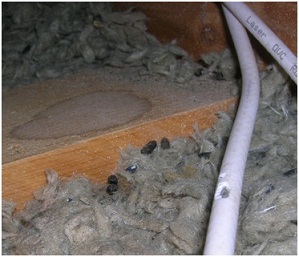
    Mice and rats tend to make pitter patter noises as they race around. Mouse and rat feces have a similar shape (long and almost cylindrical) and are usually found scattered all over the place – but while mouse feces are usually not more than six millimeters long, rat feces can be as long as one centimeter.

    On the other hand, squirrels, and most birds are most active during daylight hours. Listen for a quick pitter patter of little feet scampering around and pellet-shaped droppings, if you have squirrels. Birds give themselves away with their chirping. Their feces looks like thick, liquid piles (older droppings will be hardened), and can vary in colour depending on what they eat (ex. white, green, or brown).

    A final thing that can clue you in as to what type of animal is most likely in your attic is the size of the entry holes you find. Larger holes may mean you’re dealing with something like a raccoon. Smaller holes point towards little animals such as mice or rats.

    What to do about animals in your attic:

    Once you figure out which kind of animal you’re dealing with, you’ll need to get rid of them. For rats and mice, this generally involves setting traps (not poison as they many times just curl up, die, rot, then turn to maggots, and produce a sickening smell within your attic).

    Lay Out Traps In High Activity Areas

    This is probably the most critical part of getting rid of mice in your attic. The success of your trapping efforts depends on the type (live traps, snap traps, number and strategic locations of your traps. Laying out traps in the strategic locations can be all the difference. The best way to identify where these mice might be travelling is by following the droppings.

    As mice are cautious creatures, as such you need to ensure that you are covering enough area with traps. Set your traps along the walls and corners to ensure that you are effective in capturing the mice and getting rid of the problem.

    Check Your Traps Regularly

    As may be the case, sometimes the elusiveness of mice may dodge or set off the traps . Checking your traps regularly, sometimes even once a day might be just what is required to get rid of your pest. As checking regularly can ensure that you are able to reset traps when necessary, while also being able to quickly and safely dispose of trapped mice if your traps have worked.

    How Pacific Decontamination Services Can Help

    We neutralize the rodent/animal urine and feces by applying our eco-friendly, safe chemical, focusing our efforts on the visible contaminated areas. Depending on the job, we apply our formula by spray, mist, foam, or fog. We further kill all airborne threats in your residence/property. The average time of our on-site service is approximately one hour. An additional four hours is required to achieve maximum effectiveness. We ask that you stay out for approximately 5 hours in total.

    We also assist in root problem solving access issues regarding rodents/animals, and we HEPA vacuum mice and rat droppings, feces and clean up the contaminants as required.

    Pacific Decontamination Services uses the world’s strongest, most effective and safe antimicrobial disinfectant, deodorization and chemical decontaminate. Our professional application will eliminate up to 99.99999% of any allergen, germ, bacteria or fungus that it touches. AND as powerful as it is, it is also completely safe.

    What do you do next? How do you solve the challenge of rodents and associated health hazards?

    Call Pacific Decontamination Services at 778-269-0208 or email us at contact at pacificdecon.com

    Serving All of Vancouver Island: Victoria, Cowichan, Duncan, Nanaimo, Parksville, Qualicum, Courtenay, Comox, Campbell River, and Port Alberni.

  • Health Risks Caused by Rodent Droppings

    Health Risks Caused by Rodent Droppings

    Home owners in Victoria, Cowichan, Duncan, Nanaimo, Parksville, Qualicum, Courtenay, Comox, Campbell River, and Port Alberni are particularly prone to rodents infestation, which leave serious health hazards. Not every rodent remediation company is thorough in their elimination and decontamination techniques.

    As it turns out, rodents who unknowingly inhabit your home are posing some serious health risks on you and your family. Most people don’t even know they have a rodent infestation in their living space, but according to a national study by the National Institutes of Health (NIH), 82% of US homes have mouse allergens.

    What are mouse allergens? They’re similar to cat or dog allergens. Most people who are allergic to a cat or dog know that they are, simply because they’ve been around them enough to know. In the case of rodents though, people haven’t spent enough time with them to know that they’re allergic. This means it’s possible that you are living with allergies that come directly from the rodents living in your own home.

    The natural trail the rodents leave behind is the culprit of a great deal of the allergens you might experience. Symptoms that you might experience due to rodents are nausea, eye or skin irritation, and difficulty breathing. Because all of these symptoms are so common, they may go overlooked.

    Rodent droppings can be a nuisance when found in that dark corner or storage closet. But not only are they annoying to have to vacuum up, but the droppings (along with rodent urine) can be highly toxic as well, carrying various diseases. A common disease carried in rodent droppings is known as HPS, or Hantavirus Pulmonary Syndrome. This disease can cause people, often children, to experience serious respiratory ailments. This disease is most commonly spread rodent-to-human, and very seldom human-to-human.

    Additionally, rat feces and mouse feces can cause additional health risks. These risks are more severe than HPS because these can be airborne. If these diseases are inhaled, it is possible to become infected without even knowing it. A disease that can be contracted from rodents is Leptospirosis, a bacterial disease that can lead to kidney damage.

    Not only are rodents an inconvenience for your health, but they can also pose a threat to the health of your pets as well. Rodents can bring in parasites including fleas and lice that migrate onto the skin and into the fur of your pets.

    Also, rodents can damage or destroy many of your household items. Rodents tend to nibble on anything small enough to get their mouth over. Rodents need to trim their teeth by chewing on objects. Think of a child teething or a person clipping their fingernails. Rodents can chew through just about anything- linens, clothes, couch cushions, and even electrical wires. It’s best to keep piles of clothes or other linens out of dark, hidden, or damp corners of your house to keep rodents from finding them. This is also true of wires – often wires are hidden behind large furniture or even behind a wall- this leads to an increased chance of rodents getting to these wires and causing electrical shorts, exposed wires, and malfunctioning electrical wires.

    Rodents can lead to all sorts of problems in your home, it is in your best interest to be sure you do not have rodents and if you do- be sure to take the necessary steps to eradicate them from your home!

    Many people are allergic to rodents without even realizing it.

    What do you do next? How do you solve the challenge of bacteria left after a rat infestation?

    Call Pacific Decontamination Services at 778-269-0208 or email us!

    Serving All of Vancouver Island: Victoria, Cowichan, Duncan, Nanaimo, Parksville, Qualicum, Courtenay, Comox, Campbell River, and Port Alberni.

    Here is how we neutralize 99.99999% of all bacteria, viruses, and odors from rodents (rats and mice).

  • The Dangers of Rodent-Borne Diseases

    A number of health risks are associated with rodent borne diseases. Rat and mice exposure is very common for vehicle and home owners living in Victoria, Cowichan, Duncan, Nanaimo, Parksville, Qualicum, Courtenay, Comox, Campbell River, and Port Alberni.  Pacific Decontamination Services eliminates rodent odor (mice and rats), and neutralizes associated bacteria and contaminants.

    Rat Smell – Rat Odors

    Rats have a nasty habit of urinating wherever they go. They drag their bodies through the urine leaving a sewer like odor on their pathways. It is important that you do not stir up dust by sweeping or vacuuming up droppings, urine, or nesting materials.  Call a professional, don’t take a risk.

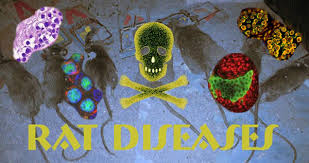
    Rodents carry a wide range of disease-causing organisms, including many species of bacteria, viruses, protozoa and helminths (worms). They also act as vectors or reservoirs for many diseases via their ectoparasites such as fleas, ticks, lice and mites, as well as some diseases carried by mosquitoes.

    In fact, rodents are thought to be responsible for more deaths than all the wars over the last 1,000 years.

    Rodent-Borne Diseases

    Arenavirus

    Bartonellosis (Trench fever)

    Capillariasis

    Echinococcosis

    Hantavirus

    Leptospirosis

    Rat bite fever

    Rat tapeworm

    Salmonellosis

    The Plague

    Toxoplasmosis

    Trichinellosis

    Tularemia

    Weil’s disease

    How Can I Catch A Rodent Disease?

    inhalation or direct contact with rodent excreta (urine, faeces, saliva);

    handling or inhaling microorganism particles aerosolized from hay, woodpiles or other materials contaminated with infectious rodent urine;

    particles aerosolized by sweeping rodent infested spaces;

    handling of infected rodents by hunters or other people;

    bites from rodents — microorganisms carried in saliva can infect both humans and other rodents;

    scratches from rodents;

    drinking contaminated water or eating contaminated food;

    rodents acting as sources for infecting ectoparasites (ticks, fleas, mites, lice) with various pathogens;

    dogs, cats and foxes (especially urban) eating rodents and then catching parasites such as tapeworms that can be passed on to humans by them; and

    rodents can also act as reservoirs for various flying-insect-borne diseases.

    How to Clean Up Rodent Urine, Droppings – How to Eliminate Odor – How to Stay Safe

    Simply put – call the professionals at Pacific Decontamination Services.  Depending on your situation, we can HEPA vacuum the carcasses, droppings and nesting materials. We will also neutralize  the associated rat and mice bacteria, and odor in your basement, crawl space, attic, home, outbuilding, office, car, RV or boat by applying our eco-friendly, safe chemical into the interior and applicable exterior areas. Depending on the job, we apply our formula by spray, mist, foam, or fog. We do not use a tent. The average time of our on-site service is approximately one hour. An additional four hours is required to achieve maximum effectiveness. We ask that you stay out of the premise for approximately 5 hours in total. Read more about how we work.

    Pacific Decontamination Services uses the world’s strongest, most effective and safe antimicrobial disinfectant, deodorization and chemical decontaminate. Our professional application will eliminate up to 99.99999% of any allergen, germ, bacteria or fungus that it touches. AND as powerful as it is, it is also completely safe.

    What do you do next? How do you solve the challenge of rodent borne diseases and associated health hazards?

    Call Pacific Decontamination Services at 778-269-0208 or email us!

    Serving All of Vancouver Island: Victoria, Cowichan, Duncan, Nanaimo, Parksville, Qualicum, Courtenay, Comox, Campbell River, and Port Alberni.

  • Hantavirus Pulmonary Syndrome Death of Woman

    Hantavirus Pulmonary Syndrome Death of Woman

    Homeowners in Victoria, Cowichan, Duncan, Nanaimo, Parksville, Qualicum, Courtenay, Comox, Campbell River, and Port Alberni need to be aware of Hantavirus and the dangerous bacteria left behind by rats and mice.

    Hantavirus is primarily spread by rodents and is contained in their droppings. Recently, a 27-year old mother from New Mexico died from this rare, rodent-borne disease.

    Extreme caution must be taken if you decide to vacuum or sweep up the feces from rats and mice yourself. Disturbing the droppings aerosolizes the virions, making it possible for you to breathe them in and possibly become infected.

    Leave the cleaning to the experts at Pacific Decontamination Services.

    Hantavirus is usually spread through contact with rodents—such as the deer mice, cotton rats, rice rats the white-footed mouse—and is usually transmitted to humans when they are bitten or encounter fresh rodent droppings.

    Hantavirus Pulmonary Syndrome (HPS) is a severe, sometimes fatal, respiratory disease in humans caused by infection with hantaviruses.

    Anyone who encounters rodents that carry hantaviruses is at risk of HPS. Rodent infestation in and around the home remains the primary risk for hantavirus exposure. Even healthy individuals are at risk for HPS infection if exposed to the virus.

    The virus can lead to Hantavirus Pulmonary Syndrome, according to the Centers for Disease Control, which causes coughing and shortness of breath as fluid builds up in the lungs. The transmission of hantavirus to humans does occur, with 728 reported cases in the United States as of January 2017. The virus can be fatal and has a mortality rate of 38 percent.

    Transfer from person to person: To date, no cases of HPS have been reported in Victoria, Duncan, Cowichan Valley, Ladysmith, Nanaimo, Parksville, Qualicum Beach, Port Alberni, Courtenay, Comox or Campbell River in which the virus was transmitted from one person to another. In fact, in a study of healthcare workers who were exposed to either patients or specimens infected with related types of hantaviruses (which cause a different disease in humans), none of the workers showed evidence of infection or illness.

    Who can help?

    We hope you won’t ever find yourself requiring decontamination and HEPA cleaning, but, if you do, reach out to Pacific Decontamination Services at 778-269-0208 and talk to us.

    We decontaminate, then clean the affected area with our HEPA vacuuming services which include crawl spaces, basements, attics, vehicles, and any other areas of contamination including carpets.
    HEPA is an acronym for “high-efficiency particulate air.” HEPA is a type of filter that can trap a large amount of very small particles that other vacuum cleaners would simply recirculate back into the air of your home.

    Our HEPA filters remove 99.97% of even the worst of rodent feces, mold spores, pet hair and dust particles, 0.3 microns in size or larger, thus improving your indoor air quality.
    Efficient, detailed vacuuming removes these stored contaminants so that they do not recirculate back into the air you breathe.

    Not only will we neutralize all dangerous bacteria, but we will also help you root problem solve your rodent problem without having to subscribe to a monthly pest control service.

    Pacific Decontamination Services uses the world’s strongest, most effective and safe antimicrobial disinfectant, deodorization and chemical decontaminate. Our professional application will eliminate up to 99.99999% of any allergen, germ, bacteria or fungus that it touches. AND as powerful as it is, it is also completely safe.

    Serving All of Vancouver Island: Victoria, Cowichan, Duncan, Nanaimo, Parksville, Qualicum, Courtenay, Comox, Campbell River, and Port Alberni.


  • Hantavirus **High Risk** – Do Not Sweep Up or Vacuum Rodent Droppings

    Hantavirus **High Risk** – Do Not Sweep Up or Vacuum Rodent Droppings

    Homeowners in Victoria, Cowichan, Duncan, Nanaimo, Parksville, Qualicum, Courtenay, Comox, Campbell River, and Port Alberni Home are particularly prone to the possibility of hantavirus and the dangerous bacteria left behind by rats and mice.

    Hantavirus is primarily spread by rodents, and is contained in their droppings.

    Vacuuming/sweeping the droppings aerosolizes the virions, making it possible for you to breathe them in and become infected. If you are, there is no treatment other than basic rest and fluids.

    There is a high mortality (death) rate if you get this virus. Do not put yourself in harms way when dealing with hantaviruses…it is not worth it.

    Leave the cleaning to the experts at Pacific Decontamination Services.

    We decontaminate, then clean the affected area with our HEPA vacuuming services which include crawl spaces, basements, attics, vehicles, and any other areas of contamination including carpets.
    HEPA is an acronym for “high-efficiency particulate air.” HEPA is a type of filter that can trap a large amount of very small particles that other vacuum cleaners would simply recirculate back into the air of your home.

    Our HEPA filters remove 99.97% of even the worst of rodent feces, mold spores, pet hair and dust particles, 0.3 microns in size or larger, thus improving your indoor air quality.
    Efficient, detailed vacuuming removes these stored contaminants so that they do not recirculate back into the air you breathe.

    Facts about hantaviruses

    Hantaviruses are a group of viruses that may be carried by some rodents. Some hantaviruses can cause a rare but deadly disease called hantavirus pulmonary syndrome. The disease is called HPS for short.

    What animals can give people hantaviruses?

    Only some kinds of mice and rats can give people hantaviruses that can cause HPS. In North America, they are the deer mouse, the white-footed mouse, the rice rat, and the cotton rat.

    However, not every deer mouse, white-footed mouse, rice rat, or cotton rat carries a hantavirus. Other rodents, such as house mice, roof rats, and Norway rats, have never been known to give people HPS. Since it is hard to tell if a mouse or a rat carries a hantavirus, it is best to avoid all wild mice and rats and to safely clean up any rodent urine, droppings, or nests in your home. Dogs and cats cannot give people hantavirus infections.

    Who can get HPS?

    Any man, woman, or child who is around mice or rats that carry harmful hantaviruses can get HPS. You do not have to already be sick to be at risk for HPS. Healthy people have become ill with HPS. While HPS is a very rare disease, cases have occurred in most regions of North America.

    Who can help?

    We hope you won’t ever find yourself requiring decontamination and HEPA cleaning, but, if you do, reach out to Pacific Decontamination Services at 778-269-0208 and talk to us.

    Not only will we neutralize all dangerous bacteria, but we will also help you root problem solve your rodent problem without having to subscribe to a monthly pest control service.

    Pacific Decontamination Services uses the world’s strongest, most effective and safe antimicrobial disinfectant, deodorization and chemical decontaminate. Our professional application will eliminate up to 99.99999% of any allergen, germ, bacteria or fungus that it touches. AND as powerful as it is, it is also completely safe.

    Serving All of Vancouver Island: Victoria, Cowichan, Duncan, Nanaimo, Parksville, Qualicum, Courtenay, Comox, Campbell River, and Port Alberni.

  • HOW TO GET RID OF A DEAD RAT SMELL

    HOW TO GET RID OF A DEAD RAT SMELL

    Homeowners in Victoria, Cowichan, Duncan, Nanaimo, Parksville, Qualicum, Courtenay, Comox, Campbell River, and Port Alberni Home are particularly prone to dead rat odors due to their proximity to warmth and moisture, which leave behind dangerous bacteria.

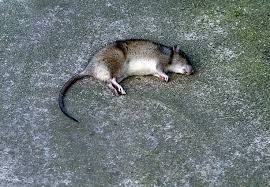
    In addition to the diseases a live rat can carry, the threat of having dead rats decomposing somewhere in your home is a primary reason to fear an infestation. The smell can completely disrupt your family’s wellbeing for weeks or longer. We will teach you the signs of a dead rat smell and what can you do about it?

    What does a dead rat smell like? It is a putrid odor is a nasty mix of chemicals produced as the body decomposes, including sulfur dioxide and methane. The best way to describe it would be the rotting smell of death.

    The bigger the animal, the more tissue to break down, the more time needed to decompose. Rats are larger than mice, so the smell of a dead rat is likely to be stronger and last longer than that of a mouse. Still, unless you can actually see the animal, you might not be able to determine whether you have a dead rat or a dead mouse in the house.

    Regardless of whether it’s a rat or mouse, or squirrel, it is difficult to calculate how long the smell of a dead animal will last. It may take days or weeks for the carcass to dry out and the odor to naturally and completely disappear. Because we are on the West Coast, the humidity will affect the process and make the nauseating odor even more intense. So, if a rat dies near moist areas in your home or vehicle, it may be “ripe” for a long time.

    How to get rid of a dead rat smell

    You need to be aware of the dangers of rodent droppings.

    Also, you need to understand the dangers of Hantavirus Pulmonary Syndrome (HPS), which can be fatal. People become infected through contact with hantavirus-infected rodents or their urine and droppings.

    Find the source. When you find the dead rat smell, start looking for an increased presence of flies, maggots, beetles and other insects that are attracted to dead animals. If flies seem to be nearby or landing near a specific area on a wall or floor, try a “sniff test.” Determine if the smell is stronger at that spot? Look for stains as sometimes bodily fluids seep out of a carcass. In addition, keep an eye out for stains on drywall or ceiling tiles. Rats do not always die in plain sight or within easy reach. They are nocturnal beings that prefer to hang out in small spaces that offer plenty of hiding places.

    Next step is to removing the dead animal and ventilate the area. Sometimes desperate times call for desperate measures, and the process of extricating one dead rat from your home or vehicle may include cutting through walls or floors, replacing ceiling tiles, pulling up carpets, etc.

    In some cases, the best solution is to leave the dead animal where it is, and let Pacific Decontamination Services take over.

    Here are some additional tips on how to tackle the dangerous bacteria that rodents bring.

    If you decide to remove the dead rat carcass, seal it in a plastic bag and dispose of it promptly. Read these safeguards and always wear protective gloves and clothing, including a dust filter mask or respirator, whenever handling wild animals, dead or alive.

    Finding the root cause of your rat problem.

    Rats and mice are smart and resourceful animals. They are also limber and can squeeze through very small openings. Cover vents, seal holes in walls and foundations and look for gaps around roof soffits and loose pipes.

    Prevention is the key to avoiding the dead rat smell. If you’re trying to address a rat problem, traps are preferred to poison bait. Rats may eat the poison and later die in an area of your home where their bodies cannot be removed. We do not recommend using poison.

    Remember, keeping rats out of your home is the best way to prevent one from dying and creating an unpleasant situation. Read our blog on how to Rat Proof Your Home.

    What do you do next? How do you solve the challenge of bacteria left by rats and mice?

    We hope you won’t ever find yourself with a pest control problem, but, if you do, reach out to Pacific Decontamination Services at 778-269-0208 and talk to us.

    Not only will we neutralize all dangerous bacteria, we will help you root problem solve your rodent problem without having to subscribe to a monthly pest control service.

    Pacific Decontamination Services uses the world’s strongest, most effective and safe antimicrobial disinfectant, deodorization and chemical decontaminate. Our professional application will eliminate up to 99.99999% of any allergen, germ, bacteria or fungus that it touches. AND as powerful as it is, it is also completely safe.

    Serving All of Vancouver Island: Victoria, Cowichan, Duncan, Nanaimo, Parksville, Qualicum, Courtenay, Comox, Campbell River, and Port Alberni.

  • How To Get Rid of Mice and Rats – Rodent Proofing Your Home

    How To Get Rid of Mice and Rats – Rodent Proofing Your Home

    Homeowners in Victoria, Cowichan, Duncan, Nanaimo, Parksville, Qualicum, Courtenay, Comox, Campbell River, and Port Alberni Home are particularly prone to mice and rat infestations due to their proximity to warmth and moisture, which leave behind dangerous bacteria.

    Did you know that mice can pass through holes as small as a ¼ inch?
    Scary, we know, but true.

    And, with the beginning of the adverse weather conditions, the onslaught of rodents is about to occur. In fact, the chances are that there one or two rodents already on the lookout for an entry point into your home.

    Prevention is better than cure.

    Mice and rats are the ultimate survivors, and they thrive anywhere they find warmth, shelter, water, and food. They may not bother us during spring and summer, but as the chill of autumn weather appears they look for better alternatives. Unfortunately, that often means our homes and cabins. There are a variety of steps you can take to diminish and resist this invasion.

    Mice and rats are prolific breeders. One female can produce up to eight litters a year, with six to 10 mice per litter. That means a single mouse can produce 80 other mice who will also breed and reproduce. The affect can be exponential, and that’s why this is often an ongoing battle against the furry little rodents.

    The Importance of Rodent-Proofing Your Home

    Now, if you’re not afraid of rodents, you might be wondering how important rodent-proofing your home actually is. Rodents have the potential to wreak havoc on your health, and your home.
    Here’s how: Your Health

    One of the most important reasons for rodent proofing your home lies in the risk that they pose to your health. Rats and mice are the direct cause of over 35 diseases, and they carry over 200 more diseases as they rush from one space to the next. They spread these diseases in your home by continually dropping urine and feces which you come into contact with. Read our blog on the health dangers of rodent droppings.

    Steps You Can Take

    Seal Off Access to Your Home or Garage

    This is not as easy as it sounds. A mouse can squeeze through the smallest spaces and gaps between your foundation and framing.
    Start in the basement and inspect any gaps in your foundation. If you shut off the lights in the basement, you may see daylight peeking through gaps or cracks. You can seal these with a patching cement, caulk, spackle or even steel wool. Mice are notorious for chewing through wood and just about anything else, so a patching cement might be your best bet if it’s an unfinished area and cosmetic appearance is not as important.

    Check for any holes or gaps in your garage, whether it’s attached or freestanding. Garage doors are often left open for various periods of time, and that’s an invitation for mice to hide under and around things in the garage while they search for an entrance to your home.
    Eaves and soffits aren’t out of reach for mice. Mice are good climbers and a tree or vine gives them a pathway to any gap or hole in an eave or soffit. Caulk works, or repair with new wood and re-caulk.

    Eliminate Accidental Food Sources

    Look for food left in or around spaces frequently occupied where food is consumed.

    If you have pet food, make sure none of it got scattered around by your pet, and seal the food in a sturdy plastic container with a tight-fitting lid.

    Any food storage space can become a destination for mice, and mouse droppings in stored food are especially dangerous. Make sure any food storage is well-protected either in metal cans or sturdy plastic pails or containers.

    Grass seed and wild bird seed in the garage are also mouse magnets. Make sure they’re in sealed containers and on a high shelf.

    Check for incidental water sources.

    Wet spots in the basement create water sources. Seal cracks or areas where seepage pools water. You should probably do this regardless of the mice, but if you’re unaware of the problem, this inspection step can help you remedy it.

    How To Mouse-Proof Your Home For Winter

    There are a variety of options for mouse eradication, and you should consider them carefully, especially if you have pets or children in the house. Some of the approaches are traditional and time-tested, and some fall into the category of new technology.

    General Trapping Advice

    Mice are nocturnal animals, which means they come out at night. As a result, they will be most active not only at night but in a dark room. Shut off the lights and check your traps in the morning.

    Mice hug the walls when they travel. They are skittish and nervous animals and like the reassurance of a wall next to them as they move around. They will foray into a dark and open space for food and water, but your best location for any trap is along walls and in corners or under furniture next to a wall or corner.

    Yes, you can reuse any trap, and there is some evidence that the scent of a dead mouse actually attracts other mice to a previously used trap. That’s up to you. Wear rubber gloves if you take this approach.

    Traditional bait for mouse traps is cheese or peanut butter. I prefer sharp, cheddar cheese pressed around the trigger so the mouse has to exert some pressure to get the cheese. I’ve had many occasions when the peanut butter on a spring trap was successfully licked off the trap without springing it.

    1. The traditional spring trap. We’re all familiar with this mousetrap. It’s a small, rectangular piece of wood with a snapping bar sprung by a spring when a piece of cheese or peanut butter is consumed by the trigger.

    Pros: A quick kill that is inexpensive and allows you to discard both the mouse and the trap. It’s also highly effective.

    Cons: Potentially dangerous to both kids and animals who may innocently trip the trap.

    2. Glue traps. Glue traps are a cardboard box shape that have a strong contact glue on the bottom of the trap. Sometimes you add food to the back of the trap and some are already scented with an attractive scent for mice.

    Pros: These traps are also inexpensive and are specifically designed to be disposable. They’re also pet and toddler safe.

    Cons: Probably the least humane mouse trap.

    3. Live-catch traps. There are many variations on this type of trap. The concept is that they can get in, but they can’t get out. They’ll catch anywhere from one to six mice at a time, depending on the size and type.

    Pros: It’s a humane option requiring you to find a distant location to release the mice. You also can capture mice in bulk if you get one of the larger traps. Most are baited with some type of food or food combination and are usually made of metal so they can be washed and reused. Also, they are pet and toddler safe.

    Cons: They cost more but because they’re reusable, that’s not a big issue. They also tend to be somewhat large and visible, so they’re OK in a basement, but on the kitchen floor they stand out a bit more than you might like. Also, when you release the mice, make sure it’s a good distance from your home. The backyard is just going to invite them to try and get back in, and your neighbor may not appreciate it if you dump them in their backyard.

    4. Mouse poison. Mouse poison is a box of small, edible pellets that are usually made with corn and permeated with a potent poison. The mice eat the poison and will often run to an open space to die, although sometimes they will die in a hidden space and the only way to find them is the smell of a dead and rotting animal.
    Pros: This type of eradication is often used in barns, sheds and other locations that are hard to access or check on a regular basis. It’s also used for large infestations when single traps just can’t do the job.

    Cons: Be very careful with this one. Some stores won’t even sell it for liability reasons. Regardless of how well you hide it, a pet or toddler can die from ingesting it. In the old vernacular it was called “rat poison.”

    5. Ultrasonic sound. There are products on the market that broadcast a high-frequency sound that is supposed to repel mice. I’ve never tried them and they might work, but I worry that they might also affect a pet dog or cat.

    Pros: They’re safe for children and if placed properly may actually repel rodents with little effort.

    Cons: Many of these products imply they will repel rodents in a broad range, from mice to rats, squirrels, chipmunks, rabbits, raccoons, and possums.

    6. Chemical repellents. These are repellents that you spray in areas where mice enter or reside. They usually come in a plastic bottle with an adjustable spray, from mist to a direct stream.

    Pros: They’re easy to apply across a broad area or areas.

    Cons: Some people don’t like spraying chemicals around their homes, although there are natural versions on the market. Also, the scent eventually fades. so you have to reapply from time to time.

    Keep at it!

    After you have tried one or more of the above methods, be vigilant to see if the mice have returned. Droppings are a clear sign they have, as is chewed paper or cardboard shreds. If you think they’re back, don’t hesitate! Once they start reproducing you’ll be back to the battle again until spring.

    Remember, there are serious health risks caused by rodent droppings.

    What do you do next? How do you solve the challenge of bacteria left after a rat infestation?

    We hope you won’t ever find yourself with a pest control problem, but, if you do, reach out to Pacific Decontamination Services at 778-269-0208 and talk to us.

    Not only will we neutralize all dangerous bacteria, we will help you root problem solve your rodent problem without having to subscribe to a monthly pest control service.

    Pacific Decontamination Services uses the world’s strongest, most effective and safe antimicrobial disinfectant, deodorization and chemical decontaminate. Our professional application will eliminate up to 99.99999% of any allergen, germ, bacteria or fungus that it touches. AND as powerful as it is, it is also completely safe.

    Serving All of Vancouver Island: Victoria, Cowichan, Duncan, Nanaimo, Parksville, Qualicum, Courtenay, Comox, Campbell River, and Port Alberni.

  • How to Eliminate Harmful Bacteria from Rodent Feces and Rat Droppings

    How to Eliminate Harmful Bacteria from Rodent Feces and Rat Droppings

    Homeowners in Victoria, Cowichan, Duncan, Nanaimo, Parksville, Qualicum, Courtenay, Comox, Campbell River, and Port Alberni Home are particularly prone to repeated rat infestations due to their proximity to warmth and moisture, which leave behind bacteria ridden rat poop (feces). Not every pest control company is thorough in their elimination and decontamination techniques etc.

    Rats are a disease-carrying rodent, and the cleanup after a rodent infestation is vitally important. There are 4 reasons that I think it is a very important part of the process.

    The smell can be overwhelming

    Rats can carry diseases such as: Hantavirus, Bubonic plague, Salmonellosis, and rat-bite fever.

    The presence of rats and the scent of their droppings and remains can attract other animals

    They can chew away at wood and drywall and even cause mold.

    As soon as I effectively rid the property of the rodents, I would seal every place that could act as an entry way, and then I would begin the extensive cleaning process.

    The first step that I would conquer would be to vacuum. Rat feces that are left behind on flatter surfaces can easily be sucked up by an industrial-sized vacuum. But a regular vacuum cleaner would suffice to clean up on things such as insulation. Remember to wear protective gear.

    The second step is to rip out and replace the insulation. Rodents love to get into the fiberglass insulation and urinate and poop in it. This becomes impossible to clean, so instead of cleaning it, I would completely tear it out and toss it. Then I would replace it with new insulation.

    The third step is to use the electric fog. In a perfect world, I would just remove 100% of the droppings and urine and fur, but it’s just not possible to do this perfectly. So an alternative is to use an electric fog machine to clean the areas that I can’t reach manually. Find a company that uses a Health Canada approved, eco-friendly, safe chemical that breaks down organic materials up to 99.99999% – like the urine and droppings from a rodent, and it destroys any smell, along with the disease-carrying bacteria and viruses.

    Some other things to keep in mind is simple, but extremely beneficial. Do not inhale the rodent droppings! Especially if the infestation is in the attic. There isn’t a lot of airflow, so it becomes very dangerous. If your infestation is in the attic, there are some necessary steps to take. Usually by the time you discover the infestation in the attic, you’ve already got quite the build-up of droppings. If this is the case, you’re not going to want to pick it up by hand, that would take way too long. In addition, the droppings can carry many viruses, diseases, and pathogens that can be harmful to you.

    Hantavirus is a virus that can be life-threatening and you can become infected through inhalation. This virus is dangerous because it mimics symptoms of influenza. Hantavirus has a mortality rate of almost 50%. So be careful, especially when you sweep or vacuum, because the virus can be strewn into the air and you could inhale it. Be sure to wear appropriate eye, nose, and mouth protection. This might seem like overkill, but at the end of the day, wearing some protection beats dying any day. If you can gently hand sweep the most heavily-soiled areas that would be ideal. Any ruined insulation should be stripped out and thrown away. It will be easier than trying to hand-remove the rodent poop from the insulation. Don’t worry about saving anything you tear out- throw it away, this is a safety precaution.

    Now, if you’re looking for products to clean up the rodent urine, you should heed this advice. Many people think that bleach is the best cleaning product, and though it is a good product for many things, using it to clean up rodent urine is not the most ideal cleanup product. This is because there is a chemical in urine called ammonia. It’s possible that if you mix this urine-chemical with the bleach, a new compound can be created that is very, very dangerous. This compound is well-known and is referred to as mustard gas. If mustard gas is breathed into the lungs, it can cause painful burns on the lungs which could result in a lot of pain and internal damage. So, in order to abstain from a dramatic injury such as this- use an approved cleaner before you jump right into using bleach. Cleaners that contain enzymes will effectively work to destroy the particles in urine that are harmful.

    Once this is done, then you can use bleach. A lot of people try to use dish soap, but this is ineffective because it cannot destroy all of the germs. But, it will work in tandem with the bleach and help it work to a fuller potential. However, it’s important to note that you ought to be careful when cleaning rodent’s droppings. The urine’s harmful diseases can cause things such as leptospirosis, salmonellosis, and other diseases. Don’t forget to always wear gloves and proper eye and face protection!

    Read our blog on health risks caused by rodent droppings.

    What do you do next? How do you solve the challenge of bacteria left after a rat infestation?

    Call Pacific Decontamination Services at 778-269-0208 or email us!

    Serving All of Vancouver Island: Victoria, Cowichan, Duncan, Nanaimo, Parksville, Qualicum, Courtenay, Comox, Campbell River, and Port Alberni.